A chair that lets you adjust seat depth can make a noticeable difference in posture, leg support, and long-session comfort. The best options pair sliding seats with responsive lumbar support, breathable materials, and useful armrest adjustments.
We compared 10 ergonomic office chairs with seat depth adjustment for home offices, professional workspaces, larger users, and people who need a more personalized fit.
Best 10 Ergonomic Office Chair with Seat Depth Adjustment Picks for 2026
Best Overall Fit
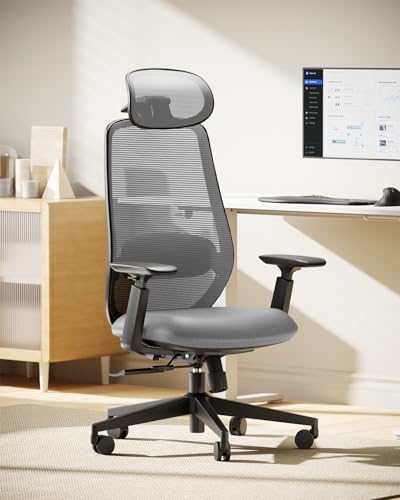
- Five-position seat-depth adjustment
- Adjustable lumbar and four-position recline
- Designed for users 5'4"–6'0" under 220 lb
Best For: Remote workers and programmers seeking detailed ergonomic adjustment
Best for Big-and-Tall Comfort

- Supports up to 300 pounds
- Dynamic 3D lumbar and 5D armrests
- Includes recline and extendable footrest
Best For: Larger users wanting work, gaming, and relaxation features
Best Compact Design
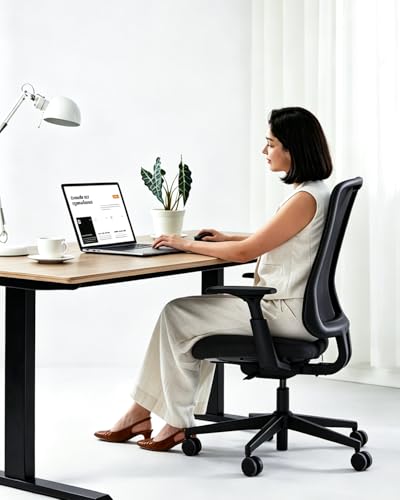
- 1.6-inch sliding seat adjustment
- Fits users 5'1"–6'0"
- Minimalist profile with breathable mesh
Best For: Small home offices and bedroom workspaces
Best Heavy-Duty Value

- 3.1-inch adjustable seat depth
- 65D molded foam seat and mesh back
- 3D arms, lumbar support, and 135° recline
Best For: Users prioritizing seat-depth range and everyday support
Balanced Lumbar Value
TRALT Adjustable Mesh Office Chair

- 17.3-inch seat depth supports thighs with knee clearance
- Depth-adjustable lumbar mechanism
- High-resilience foam and breathable mesh
Best For: Budget-conscious users wanting lumbar adjustment and a fixed, moderately sized seat
Best True Seat-Depth Fit
ProtoArc EC200 Ergonomic Office Chair

- Five-position sliding seat with 1.97 inches of travel
- Adjustable-height and depth lumbar support
- Four recline locks plus 3D headrest
Best For: Remote workers and programmers needing a highly customizable long-session fit
Most Adjustable Arm Support
Marsail Sliding-Seat Mesh Chair

- 20- to 21.6-inch sliding seat depth
- Six-level lumbar and 6D armrest adjustment
- 3D headrest and four-position recline
Best For: Users wanting extensive arm, lumbar, and seat adjustments for varied activities
Best Overall
HUANUO 6D Big and Tall Ergonomic Chair
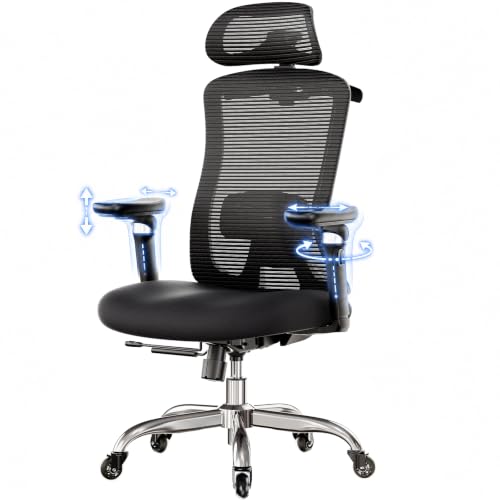
- Adjustable seat depth, lumbar, headrest, and 6D armrests
- 330-pound capacity with four-position recline
- Quiet rubber casters and five-year warranty
Best For: Big-and-tall users seeking extensive ergonomic customization
Best Value

- Sliding seat cushion supports different leg lengths
- Adjustable lumbar, 3D armrests, and 2D headrest
- Four lockable recline positions and 300-pound capacity
Best For: Home-office users wanting practical seat-depth adjustment
Best Overall Fit – ProtoArc EC200
The ProtoArc EC200 is a strong pick if you want an ergonomic office chair with seat depth adjustment for long workdays. Its five-position sliding seat, adjustable lumbar support, high-tension mesh back, and 55D foam cushion are designed to improve fit and support for users between 5’4″ and 6’0″ and under 220 pounds.
Best For: Remote workers and programmers who want detailed ergonomic adjustment in a compact, high-back chair.
Pros:
- Five seat-depth positions with 1.97 inches of travel help improve thigh support and knee clearance.
- Adjustable lumbar support moves in both height and depth.
- Four recline lock positions from 90 to 130 degrees with tension control.
- Includes a three-year manufacturer warranty and is designed for relatively quick assembly.
Cons:
- The recommended user range excludes people over 220 pounds or outside the stated height range.
- The headrest and high-back design may be more chair than needed for smaller workspaces.
The EC200 stands out for making seat depth adjustment a central part of the fit rather than an afterthought. It is especially compelling for buyers who want a structured, adjustable chair for eight or more hours of sitting without moving into an oversized model.
Best for Big-and-Tall Comfort – ELABEST X100
The ELABEST X100 combines an adjustable ergonomic seat with features aimed at extended sitting, including dynamic lumbar tracking, a footrest, and a 300-pound capacity. While the supplied details emphasize overall adjustability rather than a specific seat-depth measurement, it is worth considering for shoppers who want a versatile ergonomic office chair with seat depth adjustment-style customization and relaxation features.
Best For: Larger users who want a work-and-gaming chair with a footrest, extensive arm adjustment, and recline support.
Pros:
- Dynamic 3D lumbar support adjusts in height, depth, and rotation.
- 5D flip-up armrests adjust in multiple directions and tuck under a desk.
- Three-stage recline pairs with an 18-inch extendable footrest.
- BIFMA-certified structure supports up to 300 pounds.
Cons:
- The footrest and larger feature set may be unnecessary for users who only need a straightforward task chair.
- The supplied specifications do not state a dedicated seat-depth adjustment range.
The X100 is best understood as a feature-rich, heavy-duty chair rather than a minimalist office seat. Its lumbar, armrest, recline, and footrest adjustments make it attractive for people who alternate between focused work, gaming, and relaxation.
Best Compact Design – ProtoArc Flexer
The ProtoArc Flexer is a practical ergonomic office chair with seat depth adjustment for smaller rooms and users who need a more compact profile. Its sliding seat offers 1.6 inches of depth adjustment, while the breathable mesh back, foam cushion, adjustable arms, and three recline positions support everyday home-office use.
Best For: Users between 5’1″ and 6’0″ who want a minimalist chair for a bedroom, study, or small home office.
Pros:
- Sliding seat adjusts 1.6 inches to help improve leg support and knee clearance.
- Breathable Wintex mesh back is designed for airflow during long sitting sessions.
- Reclines from 95 to 125 degrees with three lock positions.
- Hair-proof casters and a stated 10-minute assembly process simplify setup and use.
Cons:
- The 220-pound maximum weight recommendation limits suitability for heavier users.
- The chair has less recline range and fewer stated support adjustments than some larger models.
Flexer makes a strong case when appearance and footprint matter as much as adjustability. Its seat slider provides useful fit customization without the bulky look of an executive chair, making it a sensible choice for compact home-office layouts.
Best Heavy-Duty Value – ErgoSift M1
The ErgoSift M1 is a straightforward option for shoppers specifically looking for an ergonomic office chair with seat depth adjustment. Its seat slides across a 3.1-inch range, and the chair adds 3D armrests, adjustable lumbar support, a molded foam seat, breathable mesh, and a 135-degree recline.
Best For: Users who want a broad seat-depth range and a higher stated weight capacity for work, study, or everyday computer use.
Pros:
- 3.1 inches of seat-depth adjustment helps accommodate different leg lengths.
- 65D molded foam is designed to retain supportive shape over time.
- 3D armrests and adjustable lumbar support allow more precise positioning.
- Reclines from 90 to 135 degrees and carries a stated 330-pound build rating.
Cons:
- The supplied details conflict on capacity, listing both 330 pounds and a 250-pound maximum recommendation.
- It is a mid-back chair without a headrest.
- Assembly is required.
The M1 is appealing primarily because its 3.1-inch sliding seat offers the widest explicitly stated seat-depth range in this group. Buyers should verify the applicable weight limit before ordering, but the combination of molded foam, mesh airflow, and basic ergonomic controls is well suited to practical daily use.
Balanced Lumbar Value – TRALT Adjustable Mesh Office Chair
If you want an ergonomic office chair with seat depth adjustment, the TRALT offers a carefully sized 17.3-inch seat depth designed to support the thighs while leaving space behind the knees. Its adjustable lumbar mechanism, breathable mesh back, and durable foam seat make it a practical option for everyday home-office work.
Best For: Budget-conscious users who prioritize lumbar adjustment, breathable support, and a moderately sized seat.
Pros:
- High-resilience molded foam is designed to resist flattening and sagging.
- Adjustable lumbar support changes in depth to better match the spine’s curve.
- Breathable mesh back helps reduce heat buildup.
- Metal-reinforced base, BIFMA-certified gas cylinder, and 330-pound capacity add durability.
Cons:
- The seat depth is specified at 17.3 inches rather than offering a sliding adjustment range.
- No headrest is included.
- The stated fit range is approximately 5’4″ to 6’2″.
The TRALT is a sensible choice when you want targeted lumbar adjustment and a supportive, fixed-size seat without paying for extras such as a headrest. Confirm that its 17.3-inch depth suits your leg length before buying.
Best True Seat-Depth Fit – ProtoArc EC200 Ergonomic Office Chair
The ProtoArc EC200 is a strong match for shoppers specifically seeking an ergonomic office chair with seat depth adjustment. Its five-position sliding seat provides 1.97 inches of travel, allowing you to fine-tune thigh support while keeping your back against the lumbar support during long work sessions.
Best For: Remote workers and programmers who need a customizable fit for extended sitting.
Pros:
- Five-position seat-depth adjustment offers 1.97 inches of travel.
- Adjustable lumbar support moves 2.36 inches vertically and 0.8 inches in depth.
- Four recline lock positions range from 90 to 130 degrees with tilt-tension control.
- Includes a 3D headrest, high-tension mesh back, 55D foam cushion, and 3-year warranty.
Cons:
- It is calibrated for users 5’4″ to 6’0″ and under 220 pounds.
- The 45-pound chair requires assembly.
- Its 20-inch listed seat depth may be too large for some users at its starting position.
Among these options, the EC200 provides the clearest seat-depth customization, making it easier to address dangling legs or knee pressure. Its stated user range and 220-pound limit should be checked carefully for fit.
Most Adjustable Arm Support – Marsail Sliding-Seat Mesh Chair
For shoppers comparing an ergonomic office chair with seat depth adjustment, the Marsail stands out for combining a 20- to 21.6-inch sliding seat with extensive upper-body adjustments. Its six-level lumbar support, 6D armrests, 3D headrest, and breathable mesh seat are designed for varied desk, reading, and reclining positions.
Best For: Users who want maximum armrest flexibility and a larger sliding-seat range for work, study, or gaming.
Pros:
- Sliding seat depth adjusts from 20 to 21.6 inches for customized thigh support.
- Six-level lumbar support accommodates different waist positions and sitting habits.
- 6D armrests adjust in multiple directions, including height, depth, width, rotation, and flip-up movement.
- Four-position recline locks at 90, 99, 109, and 121 degrees.
Cons:
- The 20-inch minimum seat depth may not suit shorter users.
- The extensive adjustments may take time to set up for an individual fit.
- The supplied notes do not specify a maximum weight recommendation.
The Marsail is the feature-heavy pick, particularly if arm positioning matters as much as seat depth. Its deeper seat range is worth considering alongside your leg length, since it may be less suitable for users who need a compact seat.
Best Overall – HUANUO 6D Big and Tall Ergonomic Chair
If you want an ergonomic office chair with seat depth adjustment plus extensive upper-body customization, this HUANUO model is a strong all-around option. Its adjustable lumbar support, 3D headrest, 6D armrests, and high-back mesh design are suited to long work, study, or gaming sessions.
Best For: Big-and-tall users who want broad ergonomic adjustability and multiple recline positions.
Pros:
- Adjustable seat depth helps support different leg lengths and reduce thigh pressure.
- 6D armrests, adjustable lumbar support, and a 3D headrest provide highly customizable positioning.
- Supports up to 330 pounds and includes four recline positions from 95° to 123°.
- Quiet rubber casters are designed for hardwood, tile, and carpet.
Cons:
- The extensive adjustment system may take time to dial in.
- Its 38.6-pound build and big-and-tall form may be more chair than smaller users need.
The HUANUO stands out when personalized fit matters most. A five-year warranty adds useful peace of mind, while the breathable mesh and memory-foam seat support extended daily use.
Best Value – LuxErgo High-Back Mesh Chair
This LuxErgo is a practical ergonomic office chair with seat depth adjustment for shoppers who want focused posture support without an overly complex feature set. The sliding seat cushion, adjustable lumbar system, headrest, and waterfall-edge design address common pressure points during desk work.
Best For: Home-office users who want adjustable thigh support and a supportive high-back mesh design.
Pros:
- Sliding seat cushion lets users adjust seat depth for better thigh support and posture.
- Height-adjustable lumbar support can be customized for support strength.
- Four lockable recline positions cover upright sitting and relaxed working angles from 90° to 110°.
- 3D armrests and a 2D headrest offer useful positioning flexibility.
Cons:
- Its 300-pound capacity is lower than the other chairs in this roundup.
- The supplied dimensions may be less straightforward for comparing overall chair height and width.
With a breathable mesh back, linen cushion, and high-density foam seat, the LuxErgo balances adjustability and everyday comfort. It is a sensible choice for users who value seat-depth tuning but do not need a 400-pound capacity.
Best Heavy-Duty Pick – MALOL 400-Pound Ergonomic Chair
For shoppers needing an ergonomic office chair with seat depth adjustment and a higher weight rating, the MALOL combines a 5cm sliding seat with a reinforced frame and aluminum base. Its dynamic lumbar system, 6D armrests, and 3D headrest provide extensive support for work, gaming, or study.
Best For: Heavier users who want a durable chair with detailed adjustment options and built-in break-time features.
Pros:
- Supports up to 400 pounds with an aluminum alloy base and certified gas lift.
- 5cm seat-depth adjustment helps match the chair to leg length and reduce thigh pressure.
- 6D armrests, a 3D headrest, five backrest-height levels, and dynamic lumbar support enable precise fitting.
- Includes a retractable mesh footrest, coat hanger, and quiet PU casters.
Cons:
- The one-year manufacturer warranty is shorter than the HUANUO chair’s stated warranty.
- Its extensive features and 46-pound weight may be excessive for a basic workstation.
The MALOL is the most capacity-focused option here, while still offering a breathable mesh back and three lockable tilt positions. It is particularly appealing if stability, customization, and occasional leg support matter as much as desk seating.
How We Picked the Best Ergonomic Office Chair with Seat Depth Adjustment
We focused on chairs that offer genuine seat-depth adjustment rather than a fixed seat with only height or tilt controls. We also considered lumbar-support range, armrest adjustability, seat and back materials, weight capacity, headrest design, caster performance, and features that matter during long work sessions. Models with footrests, sliding seats, molded foam, or high-elastic mesh were evaluated for their likely use cases rather than treated as universal advantages.
Because comfort is highly individual, specifications should be checked against your height, desk setup, and preferred sitting posture before buying. A well-designed Ergonomic Office Chair with Seat Depth Adjustment should let you sit back against the backrest while keeping a small gap behind your knees.
Quick Comparison
| Best For | Look For |
|---|---|
| Long workdays | Sliding seat, adjustable lumbar support, breathable back |
| Smaller users | Shorter minimum seat depth, responsive seat slider |
| Taller or larger users | High back, wider seat, higher weight capacity |
| Relaxed breaks | Recline function, headrest, or built-in footrest |
| Flexible desk setups | Multi-directional armrests and quiet casters |
Key Buying Factors for an Ergonomic Office Chair with Seat Depth Adjustment
Seat-Depth Range and Mechanism
Look beyond the phrase “adjustable seat depth.” Check how far the seat slides, how securely it locks, and whether the adjustment is easy to make while seated. A useful range supports both shorter and taller users without pressing into the backs of the knees.
Lumbar and Upper-Back Support
Adjustable lumbar support is more useful when it can move vertically or change firmness. A high back can support the shoulders, while a headrest is helpful for reclining but should not force your head forward during upright work.
Armrests, Seat Padding, and Airflow
4D, 5D, or 6D armrests can improve keyboard and mouse positioning, but only if they remain stable. Mesh improves ventilation; molded foam may provide more consistent pressure relief. Consider which matters most in your room and sitting style.
Fit, Capacity, and Everyday Movement
Confirm the chair’s stated weight capacity, seat width, minimum and maximum height, and recline range. Rubber or hair-resistant casters may be preferable on hard floors or in homes with pets, while a sturdy base matters for frequent movement.
Who Should Buy Which Ergonomic Office Chair with Seat Depth Adjustment?
Choose a compact, easily sliding seat if you are shorter or often find standard office chairs too deep. Look for a high-back, wide-seat model with a stronger weight rating if you are taller or need additional room. For hot rooms or extended sessions, prioritize breathable mesh and adjustable lumbar support. If you alternate between focused work and reading or watching content, a reclining chair with a headrest or footrest may be worthwhile.
For a shared workspace, prioritize broad adjustability over specialized extras. The best choice is the model that lets each user set seat depth, lumbar position, arm height, and seat height quickly and securely.