The right sketchbook can make detailed drawing more controlled, comfortable, and enjoyable. Paper weight, surface smoothness, binding, and page size all affect how well fine lines, layering, and repeated corrections perform.
We compared 10 sketchbooks for detailed work across marker pads, mixed-media books, hardcover journals, and everyday drawing formats to help you choose the best fit for your tools and working style.
Best 10 Sketchbooks for Detailed Work Picks for 2026
Best Marker Sketchbook
Ohuhu Double-Sided Bleedproof Pad

- 120 usable pages on 60 double-sided sheets
- Smooth 150 gsm paper for alcohol markers
- Portable hardcover with perforated pages
Best For: Alcohol-marker illustrations and blending practice
Best Large Basic Sketchbook

- Roomy 8.5 x 11-inch drawing format
- 80 sheets of acid-free 90 gsm paper
- Spiral binding and removable pages
Best For: Everyday pencil, pastel, charcoal, and gel-pen work
Best Studio Sketchbook

- 192 pages of 128 gsm fine-tooth paper
- Archival-quality, acid-free pages
- Large hardcover format for studio projects
Best For: Detailed dry-media drawings and larger artwork
Best Portable Dry-Media Sketchbook

- Acid-free 100 gsm paper for dry media
- 360-degree spiral binding and hard backing
- Perforated pages for clean removal
Best For: Portable pencil, charcoal, pastel, and colored-pencil work
Best Everyday Value
UCreate Poly Cover Sketch Book

- 75 sheets of heavyweight, acid-free paper
- Perforated pages and lay-flat spiral binding
- Durable 9 x 12-inch format for dry media
Best For: Detailed pencil, colored-pencil, and crayon work
Best for Markers
Compact Anti-Bleed Marker Sketchbook

- 120gsm acid-free anti-bleed paper
- Double-sided, waterproof-coated sheets
- Lay-flat spiral binding with tear lines
Best For: Portable marker, pen, and acrylic detail work
Best Mixed-Media Option
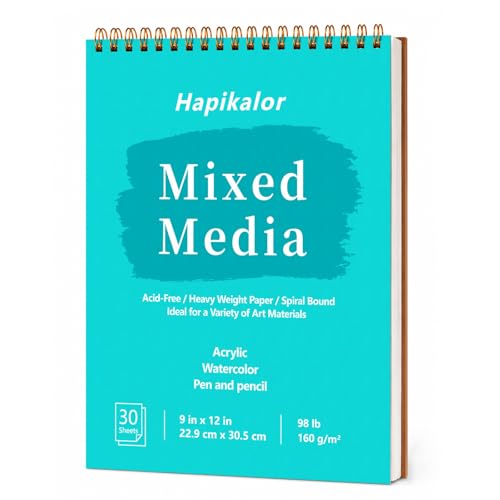
- 98 lb./160gsm acid-free mixed media paper
- Lay-flat top spiral with micro-perforated pages
- Works with drawing, acrylic, light watercolor, and pastels
Best For: Detailed illustrations and mixed-media artwork
Best Hardcover Value

- 160 pages for extended projects
- Hardcover with elastic and ribbon bookmark
- Acid-free paper for drawing and light multimedia
Best For: Detailed drawings and everyday mixed-media notes
Best Portable Option
Amazon Basics 5.25 x 8.25 Sketchbook

- Compact format for backpacks and bags
- 200 g/m² paper for watercolor and pencils
- Sturdy hard cover with bookmark
Best For: Portable detailed studies and watercolor practice
Best for Tear-Out Studies
Ankkol 9 x 12 Spiral Sketchbook

- 100 sheets with true 9 x 12 tear-out size
- Top spiral lays flat for either hand
- Perforated acid-free paper for dry media
Best For: Figure studies, drafts, and removable artwork
Best Marker Sketchbook – Ohuhu Double-Sided Bleedproof Pad
For sketchbooks for detailed work with alcohol markers, this Ohuhu pad stands out for its smooth, bleed-resistant paper and generous usable page count. Its square format is portable, while the hardcover and perforated edges make it practical for both studio work and travel.
Best For: Alcohol-marker illustrations, paint work, blending practice, and artists who want usable pages on both sides.
Pros:
- Double-sided, 150 gsm bleedproof paper provides 120 usable pages.
- Smooth surface is designed for alcohol-marker blending and paints.
- Hardcover binding, portable square size, and perforated tear-out pages.
- Acid-free, FSC-certified paper supports longer-lasting artwork.
Cons:
- The square 8.3-inch format offers less room than a standard letter-size pad.
- Light marker colors may appear darker temporarily as the ink dries.
This is a strong choice when detailed marker work is the priority. The double-sided construction offers more drawing space than a typical marker pad, though artists creating large compositions may prefer a larger rectangular sketchbook.
Best Large Basic Sketchbook – Hardbound Spiral Sketch Book
This 8.5 x 11-inch sketchbook is a practical option for sketchbooks for detailed work when you want a roomy drawing surface and easy page removal. Its 90 gsm acid-free paper supports several dry-media techniques, while the protective hardcover adds durability.
Best For: Pencil, pastel, charcoal, gel-pen sketches, classroom projects, and general drawing by kids or adults.
Pros:
- Large 8.5 x 11-inch format accommodates broad drawings.
- Includes 80 sheets of acid-free 90 gsm paper.
- Spiral binding allows convenient page handling, and die-cut lines support removal.
- Waterproof PU hardcover helps protect artwork.
Cons:
- The 90 gsm paper is lighter than the paper in heavier-duty marker pads.
- The notes support dry media, but do not specifically establish suitability for wet media.
Choose this book for everyday sketching and larger studies rather than specialized marker work. It offers useful space and straightforward handling at a basic, versatile level.
Best Studio Sketchbook – Premium Large Journal
For sketchbooks for detailed work that need substantial space and archival-minded materials, this premium large journal offers 96 sheets of professional-quality paper. Its fine-tooth surface is especially suited to controlled dry-media drawings and studio projects.
Best For: Large pencil drawings, charcoal, Conté crayon, chalk pastel, and organized studio work.
Pros:
- 192 pages, or 96 sheets, provide extensive working space.
- Heavyweight 128 gsm fine-tooth paper suits dry media.
- Acid-free archival-quality pages help preserve artwork.
- Micro-perforated pages allow clean removal, and the hardcover binding is sturdy.
Cons:
- At 2.3 pounds, it is heavier than more portable sketchbooks.
- The book-style binding may be less convenient for fully flat, 360-degree use.
This is the most studio-oriented choice in the group, combining a large format, high page count, and dry-media-friendly paper. Its weight is the tradeoff for a substantial hardcover journal suited to more ambitious drawings.
Best Portable Dry-Media Sketchbook – Spiral Drawing Pad
This 8.5 x 11-inch pad is a practical pick among sketchbooks for detailed work, particularly for artists using pencil, charcoal, pastel, or colored pencil. The 360-degree spiral binding and hard backing make it convenient for drawing at a desk, outdoors, or on uneven surfaces.
Best For: Detailed dry-media sketches, travel drawing, classroom use, and artwork intended for clean removal or framing.
Pros:
- 68 lb/100 gsm acid-free paper is designed for dry media and resists smudging and bleed.
- 360-degree spiral binding supports flexible page turning.
- Perforated pages tear out cleanly for sharing or framing.
- Hard backboard provides a drawing surface on the go.
Cons:
- At 50 sheets, it has fewer sheets than several larger-volume options.
- The 100 gsm paper is lighter than the 128 gsm and 150 gsm choices in this roundup.
This pad balances portability, page flexibility, and dry-media performance. It is a particularly useful choice for artists who want a firm backing and removable pages without carrying a heavier studio journal.
Best Everyday Value – UCreate Poly Cover Sketch Book
For sketchbooks for detailed work using pencils, colored pencils, or crayons, the UCreate Poly Cover Sketch Book offers a generous 9 x 12-inch drawing area and heavyweight 70 lb. paper. Its spiral binding lies flat, while the durable poly covers help protect pages during classroom, craft, or on-the-go use.
Best For: Detailed dry-media sketches, school assignments, crafts, and artists who want a large, durable sketchbook.
Pros:
- 75 sheets of acid-free heavyweight paper provide plenty of working space.
- Perforated pages make finished artwork easier to remove.
- Spiral binding and sturdy poly covers support portable, comfortable use.
Cons:
- Designed primarily for dry media rather than wet-media painting.
- The 9 x 12-inch format may be less convenient for compact travel.
This is a practical pick when page count, durability, and a roomy drawing surface matter most. Choose it for detailed pencil-based work and everyday creative projects.
Best for Markers – Compact Anti-Bleed Marker Sketchbook
Among sketchbooks for detailed work, this compact marker sketchbook is built for controlled layers and fine pen or marker details. Its smooth 120gsm acid-free paper has a double waterproof coating, while the spiral binding lays flat and the pages include precision tear lines.
Best For: Marker illustrations, pen drawings, acrylic details, portable sketching, and artists who need tear-out pages.
Pros:
- Anti-bleed, double-sided sheets support layered marker work.
- Compact 5.8 x 8.3-inch size suits outdoor sketching and casual use.
- 180-degree spiral binding and tear lines streamline the workflow.
- Acid-free paper is designed to resist fading and yellowing.
Cons:
- Its 50-sheet, compact format offers less room than a full-size sketchbook.
- Marker-focused paper may be less suitable for heavily textured dry-media techniques.
This is the focused choice for artists who prioritize smooth surfaces, reduced bleed-through, and portability. It is especially useful when detailed marker or pen work needs to appear on either side of the sheet.
Best Mixed-Media Option – 9 x 12 Mixed Media Sketchbook
For sketchbooks for detailed work that may include both drawing and painting, this 9 x 12-inch mixed media sketchbook provides 98 lb./160gsm paper with a lightly textured surface. The top spiral binding lays flat, and micro-perforated pages can be removed cleanly for sharing or portfolio use.
Best For: Detailed illustrations, colored pencil, pen and ink, acrylics, light watercolor washes, pastels, and mixed-media practice.
Pros:
- 160gsm mixed media paper resists bleed-through for varied techniques.
- Light texture supports blending, clean erasing, and several media types.
- Micro-perforated pages are designed for clean removal.
- Acid-free, fade-resistant paper helps preserve finished artwork.
Cons:
- With 30 sheets, it has a smaller page count than the UCreate option.
- The heavier mixed-media paper may be more than needed for simple pencil sketching.
This sketchbook is the most versatile option of the three for artists who move between detailed drawing and light painting. Its larger format and removable pages also make it useful for assignments, gifts, or a simple portfolio.
Best Hardcover Value – KINGART 8.5 x 11 Sketchbook
For artists comparing sketchbooks for detailed work, this KINGART hardcover offers a roomy 8.5 x 11-inch format with 70 lb acid-free, finely textured paper. Its 160 pages suit drawing, doodling, writing, and light multimedia projects.
Best For: Detailed drawings, everyday sketching, notes, and light wet-or-dry media work.
Pros:
- 160 pages provide substantial room for ongoing projects.
- Hardcover construction, elastic closure, and ribbon bookmark add practical protection and convenience.
- Acid-free matte paper supports graphite, sketching, doodling, and light multimedia use.
Cons:
- The 70 lb paper is intended for light multimedia rather than heavier wet-media work.
- It is a single, relatively large-format notebook rather than a compact portable option.
This is a sensible choice when page count, a stable hardcover, and a larger drawing surface matter more than specialized heavyweight paper.
Best Portable Option – Amazon Basics 5.25 x 8.25 Sketchbook
Amazon Basics Art Sketch Book for Drawing and Painting, Thick Paper, 5.25" x 8.25", 72 Sheets, Black
Check Price On AmazonFor sketchbooks for detailed work that need to travel, this Amazon Basics model combines a sturdy hard cover with a compact 5.25 x 8.25-inch format. Its 72 pages of 200 g/m² paper are positioned for drawing, doodling, watercolor, and pencil work.
Best For: Portable sketching, watercolor-and-pencil practice, and artists who want a protected book for a backpack or bag.
Pros:
- Compact dimensions make it convenient to carry.
- Thick 200 g/m² paper is described as compatible with watercolor paints and pencils.
- Sturdy black hard cover helps protect artwork, and the matching bookmark provides quick access.
Cons:
- With 72 pages, it offers less working space than the larger alternatives here.
- The smaller page size may feel limiting for expansive or highly detailed compositions.
This book favors portability and thicker paper in a smaller footprint, making it useful for artists who want detailed studies without carrying a full-size sketchbook.
Best for Tear-Out Studies – Ankkol 9 x 12 Spiral Sketchbook
Artists seeking sketchbooks for detailed work may appreciate this Ankkol pad’s true 9 x 12-inch tear-out size, top spiral binding, and 100 sheets. The acid-free 100 gsm laid-texture paper is designed for graphite, charcoal, colored pencil, pastel, and light ink.
Best For: Figure studies, manga drafts, classroom work, daily practice, and drawings that may need to be scanned, shared, or removed.
Pros:
- 100 sheets provide 200 pages for sustained practice and projects.
- Top spiral binding lays flat and leaves more hand space for left- and right-handed users.
- Micro-perforated pages support cleaner tear-out for assignments, scanning, framing, or portfolios.
- Hardcover and elastic closure help protect the book during transport.
Cons:
- The 100 gsm paper is primarily intended for dry media and light ink.
- The top spiral format may be less convenient for some storage or page-turning preferences.
This is the most task-oriented option for artists who want a large working area, flat pages, and the flexibility to separate finished studies from the bound sketchbook.
How We Picked the Best Sketchbooks for Detailed Work
We focused on the features that matter most when working with fine lines, shading, small subjects, and layered detail. The selection includes acid-free papers, smooth marker stock, heavier mixed-media pages, lay-flat spiral bindings, protective covers, and multiple sizes. We also considered page count, portability, perforation, and whether each format suits dry media, ink, markers, or light wet-media use.
Paper specifications are useful but not absolute: a 100gsm sheet may be ideal for pencil and pen, while markers and washes generally benefit from thicker or purpose-made paper. Always match the sketchbook to the medium you use most.
Quick Comparison
- Best for markers: Double-sided bleedproof marker pads with smooth, coated-feeling sheets.
- Best for mixed media: 160gsm paper designed to handle more layering and limited wet media.
- Best for pencil and ink: Smooth acid-free drawing paper with enough tooth for controlled shading.
- Best for portability: Compact 5.25 × 8.25-inch or 5.8 × 8.3-inch formats.
- Best for large compositions: 9 × 12-inch and 8.5 × 11-inch sketchbooks.
- Best for protection: Hardcover or durable poly-cover designs.
Key Buying Factors for Sketchbooks for Detailed Work
Paper Weight and Media Compatibility
Heavier paper is less likely to buckle, wrinkle, or show damage during repeated layering. For graphite, colored pencil, and fineliner, 90–110gsm can be sufficient. Alcohol markers need bleed-resistant paper or a protective backing sheet, while watercolor and wet techniques call for substantially heavier mixed-media stock.
Surface Texture
Fine detail usually benefits from a smooth or lightly textured surface. Smooth sheets help technical pens, fineliners, and precise graphite marks glide consistently. A more textured surface can improve pencil grip and shading but may interrupt tiny lines.
Binding, Layout, and Page Access
Spiral and top-bound books can lie flat, making them practical for drawing at a desk or on the go. Hardcover books protect finished work, while perforated pages make it easier to remove and display drawings. Check whether the binding reduces usable space near the edge.
Size and Page Count
Choose a compact book for portability and practice sessions, or a larger 9 × 12-inch format for portraits, studies, and complex compositions. More pages provide better value, but a thinner book may be easier to carry and replace frequently.
Who Should Buy Which Sketchbooks for Detailed Work?
Beginners and students should prioritize affordable acid-free paper, a durable cover, and a practical size such as 8.5 × 11 inches. Marker artists should choose a purpose-built bleedproof marker sketchbook rather than a general drawing pad. Pencil and ink artists will likely prefer smooth, heavyweight paper with a lay-flat spiral or secure hardcover. Mixed-media artists should select the heaviest paper in this roundup and verify its limits before applying wet media. Traveling artists should favor compact formats, protective covers, and bindings that stay open without constant support.