The right stretch fusible interfacing can stabilize knits, reinforce seams, support hems, and add structure without making a garment stiff or uncomfortable. The best choice depends on how much stretch your fabric needs to retain and whether you want a full-width interfacing, stay tape, or adhesive web.
We compare 10 options across lightweight and medium-weight constructions, woven and non-woven materials, fusible and sew-in formats, widths, and roll sizes. Use the guide below to match the interfacing to your fabric and project.
Best 10 Stretch Fusible Interfacing Picks for 2026
Lightweight Apparel Support
Pellon Bi-Stretch Lite Fusible

- Two-way stretch
- Fusible woven construction
- 20-inch x 25-yard roll
Best For: Lightweight tailoring and basic apparel
Flexible Fabric Bonding

- Moves with stretch fabric
- Soft, low-bulk finish
- Sewable permanent adhesive
Best For: Knits and small stretch-fabric projects
Wide-Width Tricot Support
Crystalsylara Knit Fusible Interfacing

- 58-inch-wide, 6-yard piece
- Flexible tricot knit support
- Single-sided hot-melt adhesive
Best For: Large garment panels and flexible reinforcement
Classic Cotton Structure
Pellon SF101 Shape-Flex Cotton Woven

- 100% cotton woven interfacing
- Adds body and stability
- 20-inch x 10-yard bolt
Best For: Structured garment details and needlework backing
Best Stretch Support

- Four-way stretch for knit fabrics
- Soft, lightweight polyester tricot
- Sew-in, non-fusible design
Best For: Flexible garments and embroidery stabilization
Best Bulk Roll Value
Medium-Weight Fusible Interfacing

- 11.6-inch by 30-yard roll
- Single-sided iron-on adhesive
- Adds structure without excess bulk
Best For: Garments, quilting, and home décor
Best for Seams and Edges

- One-inch-wide knit stay tape
- Iron-on, single-sided adhesive
- 25-yard roll for repeated use
Best For: Narrow seam and edge stabilization
Lightweight Stretch Stabilizer

- Crosswise stretch with lengthwise stability
- Wide 58-inch format for larger projects
- Lightweight support for quilts and garments
Best For: T-shirt quilts, blouses, bridal dresses, and lightweight knit projects
Bulk Project Support
Medium-Weight White Interfacing

- Medium-weight polyester adds structure
- Generous 30-yard roll for repeat projects
- Simple single-sided iron-on application
Best For: Large garment, quilting, craft, and home décor projects
Knit Hem Specialist
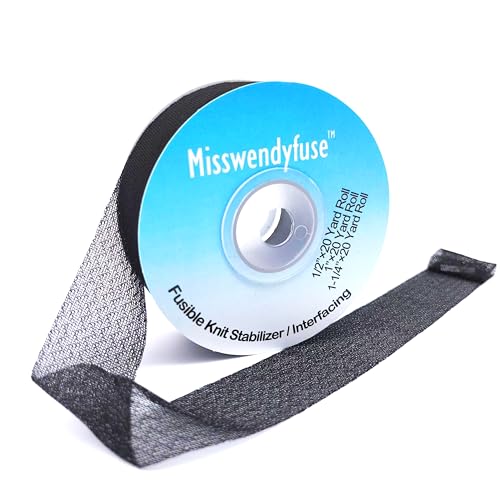
- Ultra-fine and soft for knit fabrics
- Stabilizes hems, seams, and necklines
- 20-yard roll for targeted reinforcement
Best For: Knit hems, shoulder seams, necklines, and stretch seam control
Lightweight Apparel Support – Pellon Bi-Stretch Lite Fusible
For projects that need support without losing flexibility, Pellon Bi-Stretch Lite is a practical stretch fusible interfacing choice. Its fusible woven construction has two-way stretch and is designed for tailoring and basic apparel applications.
Best For: Lightweight tailoring, basic apparel, and garments that need flexible support.
Pros:
- Two-way stretch helps it move with the fabric.
- Fusible woven construction provides tailored support.
- The 20-inch by 25-yard roll suits repeated or larger projects.
Cons:
- Its lightweight design may not provide enough structure for heavy-duty applications.
- The roll format may be more material than needed for a small project.
This is a strong option when you want stretch fusible interfacing for apparel and tailoring while preserving fabric movement. The generous 25-yard length is especially useful for sewing rooms working on multiple garments.
Flexible Fabric Bonding – HeatnBond SoftStretch Lite
HeatnBond SoftStretch Lite is a sewable, lightweight iron-on adhesive for projects where the bond needs to move with stretch fabric. It creates a permanent, double-sided bond without adding much bulk or changing the fabric’s soft hand.
Best For: Knits, stretch denim, spandex, jersey, fleece, and flannel projects requiring flexible adhesive support.
Pros:
- Designed to move with stretch fabrics.
- Maintains a soft hand without added bulk.
- Permanent, heat-activated, double-sided adhesive is sewable.
- Does not gum up needles.
Cons:
- The 17-inch by 2-yard package is smaller than bolt-length options.
- It is an adhesive web rather than a woven or tricot interfacing.
Choose this option when flexible bonding is more important than adding woven structure. Its compact size is convenient for targeted repairs, appliqué-style work, and smaller stretch-fabric projects.
Wide-Width Tricot Support – Crystalsylara Knit Fusible Interfacing
Crystalsylara Tricot Knit Fusible Interfacing provides broad, flexible support for garments, quilting, bags, and crafts. The 58-inch width and 6-yard length offer substantial coverage, while the single-sided hot-melt coating bonds to fabric with ironing.
Best For: Wide garment panels, collars, cuffs, bag linings, quilting, and projects needing flexible structure.
Pros:
- Extra-wide 58-inch width covers large areas efficiently.
- Lightweight tricot construction offers stretch and elasticity.
- Helps stabilize fabric and resist fraying or shape loss.
- Polyester fiber is described as durable, odorless, and skin-friendly.
Cons:
- Requires high-temperature ironing to activate the adhesive.
- Its 6-yard length may be excessive for occasional small projects.
- The product notes identify it as black, which may not suit light-colored fabrics.
This is a versatile stretch fusible interfacing choice when coverage and flexible reinforcement are priorities. Its wide format is particularly useful for larger garment sections and repeated sewing projects.
Classic Cotton Structure – Pellon SF101 Shape-Flex Cotton Woven
Pellon SF101 Shape-Flex® Cotton Woven Fusible Interfacing 20" x 10 yards Bolt White
Check Price On AmazonPellon SF101 Shape-Flex is a 100% cotton woven fusible interfacing for adding body and stability to fabric. Although it is not specifically described as stretch interfacing, it is a useful comparison for projects where firm woven support matters more than stretch.
Best For: Collars, cuffs, yokes, pockets, facings, needlework backings, and other detail areas needing stable support.
Pros:
- 100% cotton woven construction provides permanent stability.
- Suitable for oxford cloth, chambray, gingham, flannel, and cotton-polyester blends.
- Useful for garment details as well as needlework and punch embroidery backing.
- Large 20-inch by 10-yard bolt supports multiple projects.
Cons:
- It is not a stretch-specific interfacing.
- Woven cotton may restrict movement more than a stretch fusible option.
- Recommended care includes machine washing on gentle and tumble drying low.
SF101 is best treated as a structured alternative rather than a direct stretch fusible interfacing match. Select it when your fabric and project call for dependable cotton support in defined garment or craft areas.
Best Stretch Support – 4-Way Knit Interfacing
If you need stretch fusible interfacing for a flexible garment project, note that this option is actually a soft, sew-in tricot interfacing rather than an iron-on product. Its four-way stretch and lightweight construction make it useful when you want support without sacrificing movement.
Best For: Knit garments, light- to medium-weight fabrics, soft shaping, tailoring, and embroidery stabilization.
Pros:
- Four-way stretch supports flexible knit fabrics.
- Soft-touch 100% polyester construction adds lightweight support.
- Wide 59-inch format and approximately 2.18-yard length provide useful coverage.
- Can be trimmed with scissors and sewn into place.
Cons:
- It is non-fusible, so it cannot be attached with an iron.
- Sew-in application requires pinning and stitching.
This is a practical choice when flexibility matters more than quick iron-on application. Choose it for sew-in construction and embroidery support, but look elsewhere if you specifically need adhesive-backed stretch interfacing.
Best Bulk Roll Value – Medium-Weight Fusible Interfacing
For projects that call for stretch fusible interfacing alternatives with firm, general-purpose support, this medium-weight iron-on roll offers a broad working format. It has a one-sided adhesive, can be trimmed to pattern pieces, and is designed for applications ranging from garments to home décor.
Best For: Shirt plackets, collars, cuffs, denim pockets, quilting, patchwork, curtains, bedding, and other projects needing added structure.
Pros:
- Generous 11.6-inch by 30-yard roll suits repeated projects.
- Iron-activated adhesive bonds quickly to fabric.
- Medium-weight support helps maintain structure without unnecessary bulk.
- Suitable for materials ranging from delicate silk to heavy denim, according to the supplied product details.
Cons:
- Medium-weight construction may be too firm for projects requiring a very soft, highly flexible finish.
- It is white, so testing is advisable with darker or translucent fabrics.
This roll is a strong all-purpose option when you need dependable iron-on structure and substantial yardage. It is better suited to shaping and reinforcement than to projects where maximum stretch recovery is the priority.
Best for Seams and Edges – Fusible Knit Stay Tape
If you are searching for stretch fusible interfacing in a narrow, easy-to-control format, this one-inch knit stay tape is designed for targeted reinforcement. The iron-on, single-sided construction makes it suitable for stabilizing selected seams and edges rather than covering large fabric panels.
Best For: Narrow seam stabilization, garment edges, and sewing projects that need a 1-inch fusible knit strip.
Pros:
- Knit material is well suited to projects that need some flexibility.
- One-sided iron-on adhesive supports convenient application.
- 25-yard roll provides 75 feet for repeated sewing projects.
- Narrow one-inch width is useful for focused reinforcement.
Cons:
- Its one-inch width is not intended for broad interfacing coverage.
- Only white is listed, which may not blend with every fabric.
- The supplied details do not specify wash-performance claims.
This tape is a practical complement to broader interfacing products when you need precise stabilization along a seam or edge. Its narrow roll and fusible knit format make it more specialized than a full-width interfacing yardage.
Lightweight Stretch Stabilizer – Black French Woven Tricot
This black French woven tricot is a practical stretch fusible interfacing option for projects that need lightweight support without much added bulk. Its crosswise stretch and lengthwise stability make it especially useful when matching the behavior of knit fabrics.
Best For: T-shirt quilts, blouses, bridal dresses, and other lightweight garments or projects needing flexible stabilization.
Pros:
- Woven polyester tricot provides crosswise stretch with lengthwise stability.
- Available in a wide 58-inch format and a 3-yard option.
- Lightweight construction helps stabilize fabric without heavily increasing quilt weight.
- Single-sided fusible adhesive is designed for consistent bonding with steam and an iron.
Cons:
- Black color may not suit light-colored or sheer fabrics.
- Requires careful placement because the interfacing and fabric have different stretch directions.
- The ultra-light version offers less added stiffness than medium-weight interfacing.
Choose this stretch fusible interfacing when you want broad fabric coverage, flexible support, and a relatively soft finished result. Match its stable direction to the stretchier direction of the fabric for better control.
Bulk Project Support – Medium-Weight White Interfacing
For shoppers who need stretch fusible interfacing for repeated projects, this medium-weight polyester option offers substantial yardage and straightforward iron-on application. It adds structure to fabrics rather than focusing on a particularly soft or highly elastic finish.
Best For: Garment reinforcement, quilting projects, home décor items, and larger craft batches that need added body.
Pros:
- Medium-weight construction supplies support and structure.
- 30-yard length is useful for extensive projects or multiple smaller items.
- Heat-activated adhesive allows simple single-sided iron-on application.
- White polyester works well as a general-purpose reinforcement layer.
Cons:
- The 16.5-inch width may require more piecing on wide fabric panels.
- Medium weight can add more body than lightweight or ultra-fine interfacing.
- The supplied details do not specify a dedicated stretch direction.
This is the practical choice when quantity and added structure matter more than minimal bulk. Its generous roll is suited to makers who expect to reinforce many garments, quilts, or décor projects.
Knit Hem Specialist – Fusible Stretch Stay Tape
This 1-inch fusible knit stay tape is a focused stretch fusible interfacing solution for stabilizing seams and hems without noticeably changing fabric drape. Its ultra-fine, soft construction is designed for lightweight to mid-weight knits.
Best For: Knit hems, shoulder seams, back necklines, pant hems, zipper areas, and other seams that need stretch control.
Pros:
- Soft, fine, and stretchy design avoids adding much stiffness or bulk.
- Helps prevent knit seams from stretching out or becoming misshapen.
- Useful for reducing curling, tunneling, and insufficient stretch in knit hems.
- 20-yard length provides ample tape for multiple garments.
Cons:
- At 1 inch wide, it is intended for targeted reinforcement rather than broad fabric coverage.
- Best suited to lightweight and mid-weight knits, limiting its use on heavier fabrics.
- Application requires a pressing cloth or scrap of muslin and steam.
Pick this tape when a full sheet of interfacing would be excessive. It is particularly useful for preserving the stretch and feel of knit garments while reinforcing vulnerable seams and hems.
How We Picked the Best Stretch Fusible Interfacing
We focused on the practical specifications that most affect sewing results: fiber and substrate type, stretch direction, adhesive coverage, thickness, width, roll length, and intended use. The selection includes flexible tricot and knit products, traditional woven interfacing, medium-weight non-woven choices, and narrow fusible stay tapes.
Because “stretch” can describe different products, check the listing carefully. Some options are designed to move with knit fabric, while others primarily stabilize woven fabric or reinforce a narrow edge. Application instructions also matter: heat, pressure, and pressing time vary by product, so always test a scrap before applying interfacing to the finished garment.
Quick Comparison
- For lightweight knit garments: Choose a soft, light tricot or knit interfacing that preserves drape.
- For seams and hems: Fusible knit stay tape provides targeted reinforcement without covering the entire fabric.
- For structured woven projects: A cotton woven product such as Shape-Flex may be more appropriate than a highly elastic interfacing.
- For large projects: Wide rolls and 25- or 30-yard lengths reduce joins and may offer better value.
- For adhesive repairs or bonding: Iron-on adhesive products are useful when you need bonding rather than broad fabric stabilization.
Key Buying Factors for Stretch Fusible Interfacing
Stretch and Recovery
Match the interfacing’s flexibility to the fabric. Two-way or four-way stretch is useful for activewear, fitted knits, and areas that must expand during wear. If the interfacing resists the fabric’s movement, seams can pucker or the garment can feel restrictive.
Weight and Hand
Lightweight interfacing is generally best for jersey, rayon knits, and delicate fabrics. Medium-weight products provide more support for collars, waistbands, bags, and heavier textiles but can change the garment’s drape. Look for a soft hand when comfort is a priority.
Fusible, Sew-In, or Adhesive
Fusible products attach with heat and are convenient for stable, even support. Sew-in tricot is useful when the fabric is heat-sensitive or when you want to avoid adhesive residue. Narrow stay tape is better for hems, necklines, shoulder seams, and other localized areas.
Width and Yardage
Measure the project before buying. Wide rolls suit panels and large garment pieces, while one-inch tape minimizes waste on edges. Longer rolls make sense for frequent sewing or production work; smaller cuts are more practical for occasional projects.
Who Should Buy Which Stretch Fusible Interfacing?
Home garment sewists should prioritize soft, lightweight knit interfacing with enough stretch to preserve comfort. Quilters, bag makers, and crafters may prefer medium-weight woven or non-woven products for added body. Tailors and costume makers can benefit from wide tricot rolls for flexible structure across larger areas. Anyone reinforcing knit hems or seams should consider fusible stay tape instead of a full sheet. Finally, choose an iron-on adhesive when the goal is bonding layers rather than stabilizing an entire fabric section.