A well-made collar needs support without becoming stiff, bulky, or uncomfortable. The right fusible interfacing helps fabric hold its shape, improves edge definition, and makes sewing details such as points and button bands easier.
These 10 options cover lightweight, medium-weight, and heavy-duty choices in non-woven and woven constructions. Use the guide below to match the interfacing to your fabric, collar style, and preferred finish.
Best 10 Fusible Interfacing for Collars Picks for 2026
Best Overall
ZOMONETI Lightweight 17-Inch Fusible Interfacing

- 17-inch by 30-yard roll
- Lightweight, breathable polyester support
- Useful for collars, cuffs, and facings
Best For: Medium to large sewing projects
Best for Smaller Batches
Pellon PLF36 Fusible Interfacing 2-Pack

- Two 15-inch by 3-yard packs
- Thin and lightweight for light fabrics
- Washable or dry-cleanable construction
Best For: Small-to-medium garment projects
Best for Added Structure
PLANTIONAL Medium-Weight Fusible Interfacing

- Medium-weight polyester support
- 30-yard roll for repeated projects
- Designed for washable collars and cuffs
Best For: Structured collars and durable garments
Best for Easy Application
White Lightweight Fusible Interfacing

- 17-inch by 30-yard roll
- Soft, breathable polyester construction
- Includes graphic ironing instructions
Best For: Light-colored garments and DIY sewing
Reliable Medium-Weight Pick
Heat'n Bond Medium Weight Interfacing

- Versatile medium-weight support
- Works with all fabric types
- Made in the United States
Best For: Everyday collars and multi-purpose sewing
Lightweight Collar Specialist
HeatnBond Ultra Lightweight Interfacing
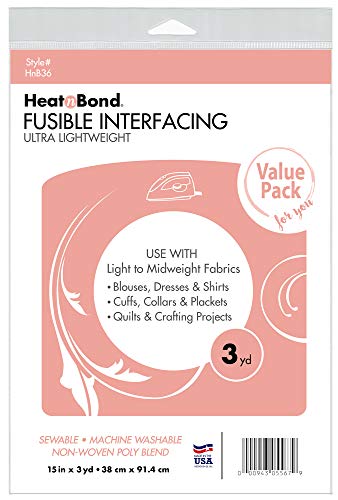
- Designed for collars and lightweight garments
- Iron-on, one-sided fusible backing
- 15 inches by 3 yards
Best For: Soft, low-bulk collars on lightweight fabrics
Maximum Structure Option
PLANTIONAL Heavy Weight Woven Cotton

- Heavy woven cotton construction
- 44 inches by 2 yards
- Designed for wash durability
Best For: Firm collars and sturdy fabric projects
Everyday Collar Support
Medium-Weight Fusible Interfacing

- 11.6-inch by 30-yard roll
- Adds structure without unnecessary bulk
- Suitable for collars, cuffs, and plackets
Best For: Repeat garment and craft projects needing moderate support
Structured Garment Choice
Heavy-Weight Fusible Interfacing

- 17.5-inch by 10-yard format
- Heavy weight for firmer collar support
- Washable, breathable polyester material
Best For: Structured collars, facings, plackets, and accessories
Bulk Sewing Value
Medium-Weight Fusible Interfacing
- 17-inch by 30-yard bolt
- Medium support without added bulk
- Washable and breathable polyester
Best For: Frequent collar work and larger garment projects
Best Overall – ZOMONETI Lightweight 17-Inch Fusible Interfacing
For shoppers comparing fusible interfacing for collars, the ZOMONETI roll offers lightweight support with substantial yardage. Its polyester non-woven construction adds structure without much bulk and can be trimmed for collars, cuffs, facings, and other garment areas.
Best For: Medium to large sewing, quilting, and garment projects that need breathable, washable reinforcement.
Pros:
- Generous 17-inch by 30-yard roll for repeated projects
- Lightweight support helps reinforce collars without adding bulk
- Single-sided adhesive is designed for iron-on application
- Suitable for garments, quilting, bags, cuffs, and facings
Cons:
- The large roll may be more material than needed for a single small project
- Requires careful placement with the adhesive dots facing the fabric
Choose this option when you want one versatile roll for many collar and garment projects. Its combination of width, length, and lightweight structure makes it a practical bulk-buy choice.
Best for Smaller Batches – Pellon PLF36 Fusible Interfacing 2-Pack
Pellon PLF36 is a convenient choice for fusible interfacing for collars when you want two manageable lengths rather than one very large roll. Its thin polyester construction works with light and medium-weight fabrics while adding structure to collars and facings.
Best For: Home sewers working on light or medium-weight garments, delicate fabrics, and several small-to-medium projects.
Pros:
- Two 15-inch by 3-yard packs offer flexible project planning
- Thin, lightweight profile is barely noticeable on fabric
- Designed for collars, facings, and strengthening stitching
- Can be machine washed warm, tumble dried low, or dry cleaned
Cons:
- Shorter total lengths may be less suitable for extensive production work
- The 15-inch width provides less coverage than wider rolls
This two-pack suits crafters who prefer smaller cuts and easy storage. It is especially useful when maintaining a soft hand and low-profile finish matters more than maximum roll length.
Best for Added Structure – PLANTIONAL Medium-Weight Fusible Interfacing
When collars need more body, PLANTIONAL provides medium-weight support in a long 30-yard roll. This non-woven polyester interfacing uses a single-sided, heat-activated adhesive and is designed for collars, cuffs, clothing, crafts, and home décor.
Best For: Projects needing firmer reinforcement and a durable, washable interfacing for repeated use.
Pros:
- Medium-weight construction adds noticeable stability and structure
- 30-yard length supports numerous projects
- Single-sided adhesive is activated with an iron
- Designed to maintain shape and adhesive strength through regular washing
Cons:
- Medium weight may be too substantial for very delicate fabrics
- At 11.6 inches wide, it offers less coverage per pass than wider rolls
This is a strong fit when a collar needs more definition than lightweight interfacing typically provides. Consider the fabric first, since its added structure may not suit soft or delicate materials.
Best for Easy Application – White Lightweight Fusible Interfacing
This white lightweight option is a practical pick for fusible interfacing for collars when you want soft reinforcement and straightforward ironing. The polyester fabric is described as breathable, wrinkle-resistant, stretch-resistant, and suitable for repeated washing.
Best For: DIY clothing, quilting, patchwork, and collar or cuff reinforcement where a soft drape should be retained.
Pros:
- 17-inch by 30-yard format provides ample material
- Lightweight construction supports fabric while preserving drape
- Designed for high-stress areas such as collars, cuffs, and welts
- Includes graphic instructions and recommends a pressing cloth
Cons:
- The supplied listing information does not specify a brand name
- Application requires using a cotton cloth to avoid direct ironing
Choose this roll if you value clear application guidance and a lightweight finish. Its broad sewing and craft use makes it flexible, while the white color is best matched with light-colored fabrics.
Reliable Medium-Weight Pick – Heat'n Bond Medium Weight Interfacing
For collars that need more body without committing to a heavy backing, this medium-weight Heat’n Bond interfacing is a practical option. Its notes indicate compatibility with all types of fabrics and use in apparel, home décor, and quilting, making it a versatile choice for fusible interfacing for collars.
Best For: Medium-weight collar support and general apparel, quilting, or home décor projects.
Pros:
- Medium weight provides balanced structure for collar pieces.
- Coordinates with all types of fabrics according to the product notes.
- Suitable for apparel, home décor, and quilting.
- Made in the United States.
Cons:
- The notes do not specify whether the adhesive is fusible on one or both sides.
- Medium weight may be more support than very lightweight fabrics require.
This is a sensible all-purpose choice when you want one interfacing for collars and other sewing projects. For delicate fabrics or especially firm collars, confirm that its medium weight suits your material and desired finish.
Lightweight Collar Specialist – HeatnBond Ultra Lightweight Interfacing
When a collar needs stability without losing softness or drape, this ultra-lightweight non-woven interfacing is designed for the job. It is specifically described for collars, cuffs, plackets, and lightweight garments, making it a focused fusible interfacing for collars option.
Best For: Lightweight shirts, blouses, dresses, and collars where minimal added bulk matters.
Pros:
- Ultra-lightweight design adds stability without compromising drape or softness.
- Fusible on one side for iron-on application without basting or sewing.
- Suitable for lightweight to midweight fabrics and collar projects.
- 15-inch by 3-yard package supports multiple projects.
Cons:
- May not provide enough firmness for heavy fabrics or very structured collars.
- Listed in white, which may not suit every fabric color.
- Application requires careful ironing to bond it to fabric.
This is the most targeted choice of the three for lightweight collar construction. Its low-bulk profile should preserve a softer hand, while the generous roll makes it useful beyond a single collar project.
Maximum Structure Option – PLANTIONAL Heavy Weight Woven Cotton
For collars that need substantial support, this heavy-weight woven cotton interfacing offers a firmer construction option. It uses heat-activated adhesive, measures 44 inches by 2 yards, and is designed to withstand washing, making it suitable when durability and structure are priorities.
Best For: Firm collars and durable garments or crafts made with sturdier fabrics.
Pros:
- Heavy-weight woven cotton provides robust backing and structure.
- Heat-activated adhesive allows iron-on application.
- Wide 44-inch by 2-yard format provides substantial material.
- Designed to maintain support through multiple washes.
Cons:
- Heavy weight may add too much bulk to delicate or drapey collar fabrics.
- The product notes do not provide specific collar-focused instructions.
- Its larger format may be more material than a small project needs.
Choose this option when a collar must hold its shape and withstand repeated laundering. For lightweight shirts or soft, fluid fabrics, the heavy woven cotton construction may feel unnecessarily firm.
Everyday Collar Support – Medium-Weight Fusible Interfacing
This 11.6-inch-wide, 30-yard roll is a versatile option when shopping for fusible interfacing for collars. Its medium weight adds structure while helping avoid unnecessary bulk, and the white finish suits light-colored fabrics.
Best For: Shirt collars, cuffs, plackets, denim pockets, quilting, and other garments or home-decor projects that need moderate stability.
Pros:
- Long 30-yard roll offers ample material for repeat sewing projects.
- Medium weight supports fabric without making it feel overly bulky.
- Designed for fabrics ranging from delicate silk to heavier denim.
- Includes illustrated paper instructions for iron-on application.
Cons:
- The 11.6-inch width may require more piecing for broad project panels.
- White interfacing may be less suitable for dark fabrics where show-through is a concern.
This is a practical all-purpose pick for sewists who want one roll for collars and other garment details. Its medium support and generous length make it especially useful for ongoing projects.
Structured Garment Choice – Heavy-Weight Fusible Interfacing
For collars that need firmer support, this heavy-weight, single-sided polyester interfacing offers a structured option. The 17.5-inch by 10-yard format can be trimmed for garments and medium-to-large sewing projects.
Best For: Structured collars and facings, shirt plackets, cuffs, handbags, pockets, waistbands, and other projects where stronger reinforcement is useful.
Pros:
- Heavy-weight construction provides added stability for collars and facings.
- Wide 17.5-inch format accommodates larger pattern pieces.
- Washable polyester material is designed for garment and craft use.
- Breathable, nearly invisible finish is intended to avoid excessive bulk.
Cons:
- The 10-yard length is shorter than the 30-yard alternatives in this roundup.
- Heavy weight may be more structure than lightweight or drapey collars require.
Choose this roll when collar definition and reinforcement matter more than maximum softness. It is also a convenient size for sewists working on larger garment or accessory pieces.
Bulk Sewing Value – Medium-Weight Fusible Interfacing
This 17-inch-wide, 30-yard roll is a strong option for sewists who need fusible interfacing for collars across multiple projects. Its medium weight is intended to add support without excessive bulk, while the polyester fabric is washable and breathable.
Best For: Collars, cuffs, shirt plackets, pockets, waistbands, quilting, and larger or repeated garment projects.
Pros:
- 30-yard bolt supplies material for frequent sewing and apparel work.
- 17-inch width fits larger pattern pieces with less piecing.
- Medium weight balances structure and a comfortable hand.
- Single-sided iron-on design can be trimmed to fit different shapes.
Cons:
- The large bolt may be more material than occasional sewists need.
- White color is primarily suited to light-colored fabrics.
This is the most practical choice for building a regular interfacing supply. Its wider roll and generous length make it well suited to repeated collar work and varied garment projects.
How We Picked the Best Fusible Interfacing for Collars
We focused on the factors that most affect collar performance: interfacing weight, fiber and construction, adhesive coverage, roll or package size, working width, and suitability for common shirtmaking fabrics. The selection includes lightweight products for soft cottons and blouses, medium options for everyday shirts, and heavier choices for structured garments, coats, bags, or firm decorative collars.
Because product labels and fabric behavior can vary, always test a small scrap before applying interfacing to the finished garment. A sample reveals whether the adhesive bonds cleanly, changes the fabric’s drape, or shows through from the outside.
Quick Comparison
- Lightweight non-woven: Best for thin cotton, rayon, linen blends, and soft blouse collars.
- Medium-weight non-woven: A versatile choice for standard cotton shirts and collars that need noticeable support.
- Heavy-weight non-woven: Useful for very firm structure, but more likely to create stiffness or bulk.
- Woven cotton: Provides a more fabric-like hand and can be a good match for tailored or washable garments.
- Small packs: Practical for occasional projects or testing a new type.
- Large rolls: Better value for frequent sewing, multiple garments, or larger pattern pieces.
Key Buying Factors for Fusible Interfacing for Collars
Match the Weight to the Fashion Fabric
Interfacing should usually support the fabric rather than overpower it. Lightweight interfacing preserves softness and drape, while medium weight adds dependable body to everyday collars. Heavy interfacing is best reserved for fabrics and designs that can handle a firm finish.
Choose Woven or Non-Woven Construction
Non-woven interfacing is generally easy to cut and economical. Woven interfacing has a textile-like grain and may produce a more natural feel, especially in tailored garments. Check whether the product can be cut on the grain and whether its care instructions suit the garment fabric.
Check Width, Yardage, and Adhesive
Compare usable width and total length rather than package count alone. A wider roll can reduce seams and waste on large projects. Confirm that the adhesive is single-sided if that is what your pattern requires, and follow the pressing temperature, steam, pressure, and cooling instructions carefully.
Consider Washability and Comfort
For shirts and frequently washed garments, choose an interfacing rated for the same care method as the fabric. Avoid excessive stiffness around the neck, where comfort matters. A collar that bends naturally is often more wearable than one with maximum possible rigidity.
Who Should Buy Which Fusible Interfacing for Collars?
Choose lightweight interfacing for delicate shirts, blouses, lightweight cotton, and collars that should remain flexible. Choose medium weight if you want the safest all-purpose option for conventional button-up shirts and medium-weight woven fabrics. Choose woven cotton when a fabric-like hand and tailored appearance are priorities. Choose heavy weight only when the garment design calls for substantial structure or the outer fabric is thick enough to balance it. If you sew regularly, a large roll is usually the practical choice; for occasional repairs or one garment, a smaller pack minimizes leftover material.