Choosing among the best resin printers for jewelry design means balancing fine detail, reliable exposure, build volume, and a workflow that suits your studio. The right printer can reproduce delicate textures, sharp settings, and complex prototypes with less trial and error.
This roundup compares 10 selected printers and related casting options, covering affordable desktop machines, high-resolution production models, and large-format systems for batch work.
Best 10 Resin Printers for Jewelry Design Picks for 2026
Balanced Detail Bundle

- 10K resolution with 17µm XY pixels
- Includes Wash & Cure 3.0
- 6.04 × 3.42 × 6.49-inch build volume
Best For: Detailed jewelry models with convenient post-processing
Smart Production Pick

- 16K resolution and up to 150mm/h speed
- Heated resin tank supports 30°C preheating
- AI camera, auto-leveling, and Wi-Fi
Best For: Automated, higher-throughput jewelry design workflows
Easy-Setup Precision Pick

- 14K detail with 16.8 × 24.8µm XY pixels
- Factory-calibrated automatic leveling
- Handles resins up to 8,000cps
Best For: High-detail printing with broader resin compatibility
High-Volume Studio Choice

- 33 × 18.5 × 30cm build plate
- 43µm detail on a 15-inch 8K LCD
- Designed for batch production and resin recovery
Best For: Professional studios with high-volume production needs
Best Beginner-Friendly Pick
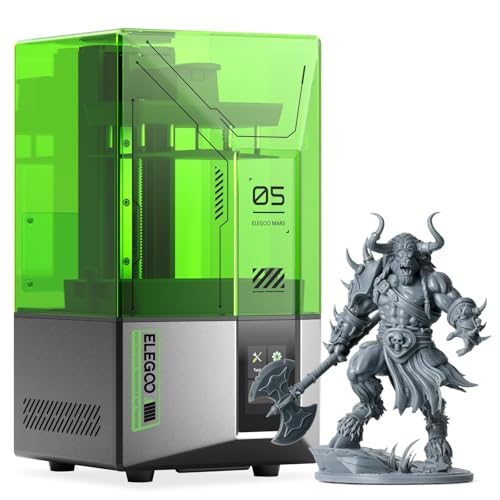
- 4K mono LCD for detailed models
- One-click automatic leveling
- Built-in alerts and overheat protection
Best For: Beginners seeking simple setup for detailed jewelry models
Best High-Resolution Value
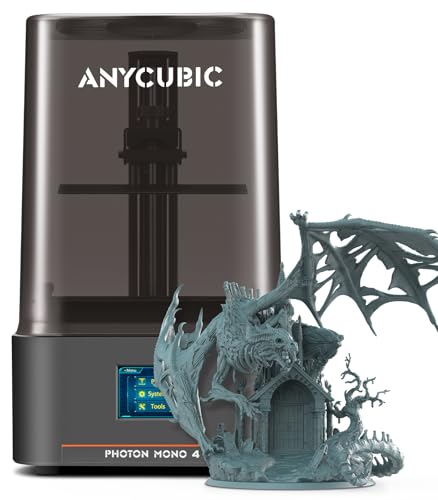
- 10K screen with 17 × 17μm pixel precision
- Stable light source for smoother surfaces
- Power-failure recovery and upgraded build plate
Best For: Detailed jewelry prototypes and small design work
Best Castable Material

- Wax-containing formula for easier burnout
- High-resolution, smooth purple prints
- Suitable for rings, pendants, and small parts
Best For: Jewelry casting workflows using compatible 405nm printers
Fast Detail Specialist
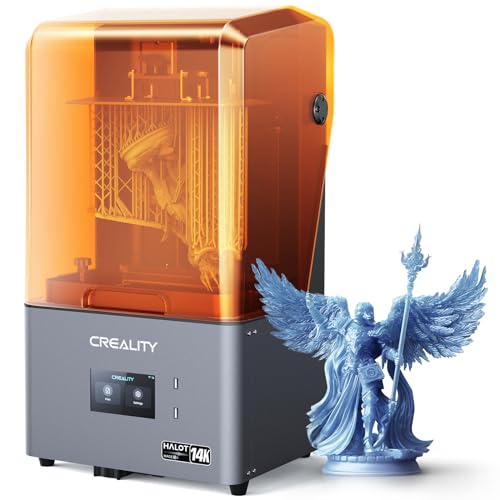
- 14K resolution for intricate jewelry details
- Print speeds up to 150 mm/h
- Remote printing and odor-filtering air purifier
Best For: High-detail jewelry work with faster production
Automated Workflow Choice

- 16K detail with up to 170 mm/h speed
- Automated heating, feeding, and resin monitoring
- Fixed build plate avoids routine leveling
Best For: Streamlined, repeatable jewelry-printing workflows
Balanced Detail Bundle – ANYCUBIC Photon Mono 4
For shoppers comparing resin printers for jewelry design, the ANYCUBIC Photon Mono 4 combines fine 10K detail with a Wash & Cure 3.0 station. Its 17µm XY pixel size, uniform LighTurbo illumination, and included post-processing equipment make it a practical option for detailed models and an organized workflow.
Best For: Jewelry designers who want a detailed printer and dedicated washing and curing equipment in one bundle.
Pros:
- 10K resolution with 17µm XY pixels for finely detailed models.
- LighTurbo matrix lighting helps reduce layer lines and rasterization.
- 6.04 × 3.42 × 6.49-inch build volume supports a range of projects.
- Wash & Cure 3.0 offers a larger 4L cleaning bucket and gooseneck curing light.
Cons:
- The build volume is smaller than the larger-format printers in this roundup.
- The bundle is aimed at LCD printers up to 7.3 inches, which may limit compatibility with larger machines.
Choose this bundle when detailed output and convenient post-processing matter more than maximum production capacity. The integrated wash-and-cure setup is especially useful for keeping a jewelry prototyping workflow streamlined.
Smart Production Pick – ELEGOO Saturn 4 Ultra 16K
Among resin printers for jewelry design, the ELEGOO Saturn 4 Ultra 16K stands out for its combination of high resolution, automated features, and fast tilt-release printing. Resin heating, automatic leveling, AI monitoring, and Wi-Fi control are useful for creators managing repeated or remote print jobs.
Best For: Designers who need a large, feature-rich printer for faster and more closely monitored production.
Pros:
- 16K MSLA resolution supports highly detailed prints.
- Tilt-release technology enables speeds up to 150mm/h.
- Built-in resin heating can preheat resin to 30°C and monitor temperature.
- AI camera, automatic leveling, anomaly detection, and Wi-Fi control add convenience.
Cons:
- At 41.1 pounds, it is a substantial machine to position and move.
- Its advanced monitoring and network features may be more than occasional hobbyists need.
This is a strong choice when throughput and automation are priorities. Its large 211.68 × 118.37 × 220mm print size and production-focused features make it better suited to serious design work than basic one-off printing.
Easy-Setup Precision Pick – ANYCUBIC Photon P1
The ANYCUBIC Photon P1 is a practical contender among resin printers for jewelry design, pairing 14K detail with factory-calibrated automatic leveling and AI-assisted inspection. Its stable ball-screw structure and compatibility with resins up to 8,000cps make it suitable for creators who want fewer setup adjustments and broader resin flexibility.
Best For: Designers seeking high detail, automatic setup checks, and support for high-viscosity materials.
Pros:
- 14K resolution and 16.8 × 24.8µm XY pixels reproduce fine details.
- Smart Leveling 3.0 performs automatic self-checks and pressure feedback.
- Wave Release Technology reduces release force by 60%.
- Supports ultra-high-viscosity resins up to 8,000cps.
Cons:
- Its larger footprint may require dedicated workspace.
- The printer-only package does not mention included washing or curing equipment.
The Photon P1 is appealing for jewelry work where crisp small features and repeatable setup are important. Its monitoring system and wide viscosity range add practical value for advanced creators experimenting with different materials.
High-Volume Studio Choice – Phrozen Sonic Mega 8K S
For professional resin printers for jewelry design, the Phrozen Sonic Mega 8K S prioritizes scale and production output. Its 33 × 18.5 × 30cm build plate, 43µm XY resolution, and compatibility with ACF film and TR300 High-Speed Resin make it suited to producing batches of detailed models rather than only individual prototypes.
Best For: Professional studios and creators producing large batches of jewelry masters, prototypes, or detailed models.
Pros:
- Large build plate supports high-volume batch printing.
- Can print up to 80 1/32-scale miniatures in under 90 minutes, according to the supplied notes.
- 43µm XY resolution captures fine textures and sharp edges.
- Lift-up lid and built-in metal drip hanger improve workspace access and resin recovery.
Cons:
- At 57.3 pounds, it is the heaviest printer in this selection.
- Its large format may be excessive for occasional or small-batch jewelry work.
- The stated 10× speed advantage depends on using ACF film and TR300 High-Speed Resin.
The Sonic Mega 8K S makes the most sense when production capacity outweighs compactness. Its spacious platform and workflow-focused design can help professional users organize repeated runs while retaining detailed output.
Best Beginner-Friendly Pick – ELEGOO Mars 5
If you are comparing resin printers for jewelry design, the ELEGOO Mars 5 is a practical option for getting started with detailed small models. Its 4K mono LCD, automatic leveling, and self-check features are designed to simplify setup while preserving fine textures and precision.
Best For: Beginners and hobbyists who want straightforward setup, detailed prints, and helpful safety monitoring.
Pros:
- One-click automatic leveling reduces calibration work.
- 4K mono LCD and COB light source reproduce intricate details and textures.
- Residue detection, resin shortage alerts, and leveling-failure alarms help reduce waste.
- Overheat protection automatically pauses printing if LED temperature exceeds 80°C.
Cons:
- The 5.65 × 3.53 × 5.91-inch print size may limit larger jewelry batches or oversized models.
- Its 4K resolution is lower than the 10K resolution offered by some alternatives.
The Mars 5 stands out when ease of use matters as much as detail. Automatic leveling and built-in checks can make it a less intimidating choice for jewelry creators developing their workflow.
Best High-Resolution Value – ANYCUBIC Photon Mono 4
For jewelry creators prioritizing fine surface detail, the ANYCUBIC Photon Mono 4 is one of the more resolution-focused resin printers for jewelry design. Its 10K screen, stabilized light source, and upgraded build plate are aimed at sharp, consistent prints with reliable adhesion.
Best For: Designers who want highly detailed prints, quick exposure times, and an easy-to-start machine.
Pros:
- 10K resolution and 17 × 17μm pixel precision support highly detailed models.
- LighTurbo matrix lighting is designed for stable curing and smoother surfaces.
- The upgraded engraved build plate improves adhesion and helps reduce shedding and warping.
- Factory calibration and a four-point leveling check support a quick startup.
Cons:
- The 6.04 × 3.43 × 6.49-inch print volume may be restrictive for larger production runs.
- The supplied notes do not specify jewelry-specific castability or burnout performance.
The Photon Mono 4 is a strong fit when crisp detail is the priority. Power-failure recovery also adds practical value by helping preserve progress after an interruption.
Best Castable Material – Siraya Tech Cast Resin
Unlike the other entries, Siraya Tech Cast is a castable resin rather than a printer. For jewelry makers choosing resin printers for jewelry design, it is a relevant finishing material for producing rings, pendants, and other small models intended for metal casting.
Best For: Jewelers and makers who need a castable 405nm resin for detailed rings, pendants, and small metal parts.
Pros:
- Wax-containing formulation is designed for easier burning and clean burnout.
- Designed to print with high resolution and a smooth purple surface.
- Does not require a very dry environment or special additive according to the supplied notes.
- Compatible with most LCD and DLP 3D printers and described as 8K capable.
Cons:
- This is resin, not a complete 3D printer, so a compatible 405nm LCD or DLP printer is required.
- The 500g bottle is a consumable that must be tuned to the printer and casting workflow.
Siraya Tech Cast makes the most sense when your goal is investment casting rather than simply displaying printed prototypes. Its easier-burn formulation and jewelry-focused applications give it a specialized role in a casting workflow.
Fast Detail Specialist – Creality HALOT-MAGE S 14K
For jewelry designers comparing resin printers for jewelry design, the Creality HALOT-MAGE S emphasizes fine detail, quick production, and a sizable build area. Its 14K resolution and uniform UV exposure are well suited to intricate jewelry models and small detailed pieces.
Best For: Designers who want high-resolution jewelry prints with faster production and remote-printing convenience.
Pros:
- 14K resolution with 16.8 × 24.8 μm pixels for detailed models.
- Dynax+ mode reaches up to 150 mm/h, according to the supplied specifications.
- Laser-carved build plate, enhanced leveling friction, and reduced-peel release film support reliable print removal.
- HALOT OS enables remote printing, while the activated-carbon air purifier helps manage odors.
Cons:
- The 27.5-pound printer occupies a substantial workspace.
- The automatic resin pump is an optional upgrade rather than a standard feature.
The HALOT-MAGE S is a strong choice when jewelry detail and throughput matter equally. Its large format can also accommodate multiple small models, while the included three-month CHITUBOX Pro membership adds value for workflow setup.
Large-Format Production Pick – ELEGOO Jupiter 2 16K
The ELEGOO Jupiter 2 is a large resin printer for jewelry design when you need to produce multiple pieces or larger master models in one job. Its 16K resolution, heated resin tank, and automated resin feeding focus on consistent results across extended print sessions.
Best For: Jewelry studios and makers who prioritize large capacity, batch printing, and automated monitoring features.
Pros:
- 302.4 × 161.98 × 300 mm build volume supports large objects or multiple smaller pieces.
- 16K resolution and 20 × 26 μm XY resolution target fine surface detail.
- Auto-leveling, 30°C tank heating, and automated resin feeding simplify longer prints.
- Built-in camera supports real-time monitoring and time-lapse photography.
Cons:
- At 63.8 pounds, it is considerably heavier and less portable than smaller-format options.
- Its large dimensions require substantial workspace.
- Some convenience features rely on compatible accessories or software, such as the optional Elegoo Marsmate air purifier.
Choose the Jupiter 2 if batch capacity is more important than a compact footprint. Its smart sensors, resin management, and Wi-Fi cluster support make it particularly suitable for a production-oriented jewelry workflow.
Automated Workflow Choice – Creality HALOT-X1 Combo
The Creality HALOT-X1 Combo is a resin printer for jewelry design built around automation and repeatable setup. Its 16K LCD, 170 mm/h rated speed, fixed build plate, and intelligent resin management can streamline production from material loading through model removal.
Best For: Makers who want high-resolution output with automated resin handling and minimal leveling setup.
Pros:
- 16K resolution with 14 × 19 μm pixels supports professional-grade detail.
- Rated speeds reach up to 170 mm/h, with a 211.68 × 118.37 × 200 mm build volume.
- Resin heating, RFID parameter recognition, laser detection, and weight monitoring simplify material management.
- Fully assembled, fixed build plate eliminates routine leveling, while twist-release removal eases model cleanup.
Cons:
- The 211.68 × 118.37 × 200 mm build volume is smaller than the Jupiter 2’s.
- Its 38-pound weight and roughly 17-inch-square footprint still require dedicated space.
- Automated resin management depends on the printer’s supported RFID and feeding system.
The HALOT-X1 Combo stands out for reducing hands-on preparation without giving up very fine resolution. It is a practical fit for jewelry makers who value repeatability, quick setup, and integrated resin handling.
How We Picked the Best Resin Printers for Jewelry Design
We focused on specifications and features that matter when producing jewelry masters, prototypes, molds, and castable patterns. Resolution, pixel size, exposure consistency, build volume, leveling, resin compatibility, and workflow automation all received priority. We also considered whether each model suits occasional design work, repeated studio production, or larger batch jobs.
Not every item serves the same role. The Siraya Tech Cast resin is a material rather than a printer, but it may be relevant to buyers planning direct investment casting with a compatible 405nm resin printer.
Quick Comparison
| Best For | Look For | Recommended Type |
|---|---|---|
| Learning and small designs | Simple setup and manageable footprint | Compact 4K or 10K desktop printer |
| Fine jewelry detail | High pixel resolution and consistent exposure | 14K or 16K MSLA printer |
| Multiple pieces per batch | Large build plate and dependable speed | Large-format production printer |
| Direct casting workflows | Clean burnout and validated resin profiles | Compatible printer plus castable resin |
Key Buying Factors for Resin Printers for Jewelry Design
Resolution and Detail
High-resolution mono LCDs can improve the definition of prongs, engraving, filigree, and other small features. Pixel count is useful, but pixel size, optical uniformity, exposure settings, and calibration also affect the finished surface.
Build Volume and Batch Capacity
A compact printer may be sufficient for rings, pendants, and individual prototypes. Larger machines are more practical when you need several pieces in one job, though they require more workspace, resin, cleaning capacity, and ventilation.
Resin Compatibility
Confirm that the printer operates at the wavelength required by your chosen resin, typically 405nm for many consumer MSLA systems. For casting, check the resin manufacturer’s recommended exposure profile, burnout schedule, investment material, and kiln process rather than assuming every castable resin behaves the same way.
Workflow and Maintenance
Automatic leveling, resin feeding, tank heating, power-loss recovery, Wi-Fi, and monitoring cameras can reduce interruptions. They do not replace routine vat inspection, film replacement, calibration, washing, curing, and safe resin handling.
Who Should Buy Which Resin Printers for Jewelry Design?
Choose a compact desktop model if you are starting jewelry design, have limited space, or mainly print one-off prototypes. These machines are easier to place and typically cost less to operate.
Choose a 14K or 16K printer if surface detail and small features are your main priorities. They are a strong fit for professional designers who want sharper masters and repeatable results.
Choose a large-format printer if you produce multiple designs simultaneously or need taller and wider objects. The extra capacity is most valuable when your workflow can keep the machine busy.
Choose a castable-resin workflow only after confirming compatibility with your printer and casting process. For commercial production, prioritize documented profiles, dependable post-processing, and repeatability over headline resolution alone.