Taking a sewing machine to quilting class is much easier with a rolling case that protects your equipment and keeps notions organized. The right bag should fit your machine securely without becoming difficult to lift, steer, or store.
We selected 10 wheeled sewing machine cases in several sizes and designs, including compact totes, hard-supported cases, and extra-large options for heavy-duty or embroidery machines. Use the guide below to narrow your choice by fit, protection, storage, and classroom portability.
Best 10 Sewing Machine Rolling Cases for Quilting Classes Picks for 2026
Best Organized Roller
LUXJA Rolling Sewing Machine Case

- Padded polyester shell with removable bottom insert
- Extensive pockets and built-in supply organizers
- Detachable dolly, shoulder strap, and telescoping handle
Best For: Organized transport to sewing classes
Best Structured Protection
Timoxi Rolling Sewing Machine Case

- Built-in 2mm plastic boards and thick padding
- Water-resistant, easy-clean nylon shell
- Detachable trolley with 30kg support capacity
Best For: Quilters seeking a more protective rolling case
Best for Flexible Travel
Arcoyard Rolling Sewing Machine Tote

- Securing strap and removable hard bottom pad
- 10 pockets plus two transparent accessory pockets
- Rolls, carries by hand, or attaches to luggage
Best For: Class attendees who also travel with their machine
Best Smooth-Rolling XL
Everything Mary XL Sewing Machine Case

- Spacious XL interior for machines and quilting supplies
- Four 360-degree spinner wheels
- Collapses flat for convenient storage
Best For: Quilters carrying extra fabric and accessories
Balanced Protection
Rolling Sewing Machine Case with Wheels

- Removable bottom pad and rigid front and back support
- Four wheels plus handles and detachable shoulder strap
- Multiple pockets for threads and sewing supplies
Best For: Standard-size machines and quilting classes
Classroom Convenience
Rolling Tote Organizer Sewing Class Bag

- Foldable trolley and retractable handle support flexible transport
- Ten compartments organize machine and craft supplies
- Folds flat for convenient cabinet storage
Best For: Sewing classes, craft events, and space-conscious storage
Professional Capacity
CAB55 XXL 23-Inch Rolling Case
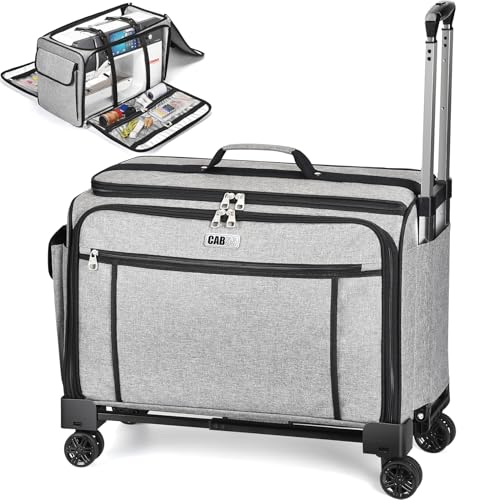
- Extra-large design for professional sewing and embroidery machines
- Rigid bottom board supports heavy equipment
- Hybrid spinner and fixed wheels improve stability
Best For: Oversized machines, quilting retreats, and professional use
Best Overall Capacity
XXL Quilted Rolling Sewing Case

- XXL compartment for machines, fabric, and tools
- Four 360-degree spinner wheels
- Multiple pockets and interior straps
Best For: Quilters needing maximum storage for classes and travel
Best Portable Option
Detachable Two-Wheel Sewing Case

- Fits many standard-size sewing machines
- Shoulder strap and handle for lifting
- Six pockets plus thread spool holders
Best For: Sewists traveling to classes with standard machines
Best Heavy-Duty Protection
23-Inch Professional Rolling Case

- 23-inch capacity for oversized machines
- Shock-absorbing padding and support board
- Lockable hybrid four-wheel trolley
Best For: Professional crafters and instructors with heavy equipment
Best Organized Roller – LUXJA Rolling Sewing Machine Case
For sewing machine rolling cases for quilting classes, the LUXJA model emphasizes organization and flexible carrying. Its padded polyester construction, removable bottom insert, detachable dolly, and numerous pockets make it practical for transporting a standard-size machine and classroom supplies.
Best For: Sewists who want extensive compartmentalization and multiple carry options.
Pros:
- Thick padding and a removable padded bottom help protect the machine.
- Wide-open main section, elastic loops, mesh pockets, and zipper compartments keep supplies organized.
- Includes a detachable dolly, shoulder strap, and top and side handles.
- Fits most standard-size machines and has a telescoping handle extending to 36.5 inches.
Cons:
- The bag is sold without a sewing machine.
- Its 16.25-by-7.75-by-13-inch bag dimensions may not suit larger machines.
The LUXJA is a strong choice when pocket capacity matters as much as basic machine protection. Its detachable rolling base also gives you a fallback carrying option when stairs or tight spaces make rolling inconvenient.
Best Structured Protection – Timoxi Rolling Sewing Machine Case
Among sewing machine rolling cases for quilting classes, the Timoxi stands out for its structured design. Built-in 2mm plastic boards, thick padding, and a water-resistant nylon shell provide added protection, while the detachable trolley lets you switch between rolling and carrying.
Best For: Quilters who prioritize rigidity, spill resistance, and a generous machine compartment.
Pros:
- Rigid plastic boards and thick padding help guard against drops and impacts.
- Water-resistant nylon is designed to be easy to clean.
- Detachable, foldable trolley has smooth-rolling wheels and supports up to 30kg.
- Includes multiple storage pockets and a dedicated thick scissor compartment.
Cons:
- The structured construction may be less flexible than a soft-sided bag.
- The listed case size is 17.5 by 9.3 by 13.6 inches, so fit should be checked for unusually large machines.
The Timoxi is a compelling option for classes or retreats where extra structure and weather resistance are useful. Its removable trolley also makes it adaptable for shorter carries and storage.
Best for Flexible Travel – Arcoyard Rolling Sewing Machine Tote
The Arcoyard combines a rolling tote with several ways to carry it, making it useful among sewing machine rolling cases for quilting classes and travel. A securing strap, removable hard support pad, 10 pockets, and water-resistant storage areas help keep both the machine and accessories organized.
Best For: Sewists who need rolling, tote, and luggage-attachment options in one case.
Pros:
- Thickened nylon, a securing strap, and a removable hard bottom pad provide added stability.
- Offers three carrying methods: rolling, top-handle carrying, and attachment to a suitcase.
- Includes 10 built-in pockets plus two transparent pockets for quick access.
- Water-resistant and stain-resistant storage helps separate wet or messy items.
Cons:
- At 6.4 pounds, it is relatively substantial before adding a machine and supplies.
- The listed dimensions are larger than those of some compact sewing machine cases.
- Its two-wheel design may be less maneuverable than a four-spinner setup.
The Arcoyard is well suited to sewists who move between classes, cars, and luggage. Its generous organization and luggage strap are especially useful when a sewing machine is part of a broader travel load.
Best Smooth-Rolling XL – Everything Mary XL Sewing Machine Case
For sewing machine rolling cases for quilting classes, the Everything Mary XL carrier focuses on space and easy movement. Its large interior accommodates most standard sewing and embroidery machines with room for fabric, patterns, tools, and thread, while four spinner wheels support smooth transport.
Best For: Quilters who carry a machine along with substantial fabric and accessory supplies.
Pros:
- XL interior provides extra room for a machine, fabric, patterns, thread, and tools.
- Four 360-degree spinner wheels and a telescopic handle improve mobility.
- Interior and exterior pockets help organize accessories.
- Collapses flat for storage when not in use.
Cons:
- At 9.4 pounds, it is the heaviest listed option before loading supplies.
- The 22-by-13.5-by-17.75-inch size may be bulky in crowded classrooms or small vehicles.
- The supplied notes do not specify a removable trolley or rigid protective frame.
The Everything Mary is a practical pick when capacity and maneuverability outweigh compactness. Its spinner wheels are particularly appealing for navigating larger venues, while the collapsible design helps offset its XL footprint during storage.
Balanced Protection – Rolling Sewing Machine Case with Wheels
For sewing machine rolling cases for quilting classes, this water-resistant nylon option combines a padded, supported main compartment with four-wheel transport. Its removable bottom pad, fastening straps, and multiple pockets make it practical for carrying a standard machine and class supplies.
Best For: Quilters and sewing students carrying a standard Singer, Brother, Janome, or similar machine with accessories.
Pros:
- Removable bottom padding and front and back hard boards add support and protection.
- Four wheels, sturdy handles, and a detachable padded shoulder strap offer flexible carrying options.
- Five compartments include a front organizer pocket, side pockets, and a back pocket.
- Water-resistant exterior is easy to clean.
Cons:
- The listed inner dimensions may not accommodate oversized professional machines.
- The product is sold as a bag only, without a sewing machine or accessories.
This is a versatile choice when you want rolling convenience, basic impact protection, and organized storage without moving up to an extra-large professional case.
Classroom Convenience – Rolling Tote Organizer Sewing Class Bag
This rolling tote is designed for sewing machine rolling cases for quilting classes, with a removable trolley, retractable handle, and four smooth-rolling casters. The padded nylon-and-canvas-style organizer can also fold flat for storage when your class or craft event is over.
Best For: Sewing students, craft teachers, and embroidery learners who need a foldable class and storage bag.
Pros:
- Removable, foldable trolley and retractable handle allow combined or separate use.
- Removable bottom pad and thick inner lining help protect against dust, scratches, and minor collisions.
- Ten compartments provide space for a machine, threads, scissors, and embroidery supplies.
- Folds flat to save cabinet space.
Cons:
- The listed interior dimensions are intended for most standard machines, not necessarily oversized models.
- The supplied details identify a removable handle setup rather than a permanently telescoping handle.
- At 2.88 kg, it adds noticeable weight before the machine and supplies are loaded.
Choose this model if compact storage and flexible classroom transport matter as much as machine organization. Its fold-flat design is especially useful for homes with limited storage space.
Professional Capacity – CAB55 XXL 23-Inch Rolling Case
For large embroidery or heavy-duty machines, this XXL case offers a more specialized answer to sewing machine rolling cases for quilting classes. Its rigid bottom support board, thick padding, tear-resistant fabric, and hybrid four-wheel layout are built around stability and substantial equipment storage.
Best For: Professional quilters, embroidery users, instructors, and retreat attendees with oversized machines.
Pros:
- Extra-large 23-inch format is designed for professional sewing and embroidery machines.
- Rigid internal bottom board helps prevent sagging and keeps the machine level.
- Two spinner front wheels and two fixed rear wheels balance maneuverability with directional control.
- Large pockets hold items such as foot pedals, embroidery hoops, and thread collections.
Cons:
- Its extra-large professional format may be more case than needed for a standard household machine.
- The supplied notes do not provide complete external or internal dimensions beyond the 23-inch size reference.
- A larger case may require more storage space even though it folds when not in use.
This is the strongest fit for users whose machines are too large or heavy for standard rolling totes. The reinforced base and hybrid wheel system prioritize stability for demanding travel to classes, retreats, or professional workspaces.
Best Overall Capacity – XXL Quilted Rolling Sewing Case
For shoppers comparing sewing machine rolling cases for quilting classes, the Everything Mary XXL case stands out for its roomy design and four-wheel mobility. Its large compartment, interior straps, and multiple pockets can accommodate a machine plus fabric, thread, and tools for class or home use.
Best For: Quilters who need generous storage and smooth maneuverability.
Pros:
- XXL interior with 21.5-by-13-by-15-inch dimensions for a machine and supplies
- Four 360-degree spinner wheels and reinforced handles support easier transport
- Five compartments, pockets, zippers, and interior straps help organize equipment
- Reinforced polyester construction is designed for repeated use and travel
Cons:
- Its 5.38-kilogram weight may feel substantial when fully loaded
- The XXL exterior may be more bag than needed for compact machines
This is a practical choice when storage capacity matters as much as rolling convenience. Measure your machine against the listed interior dimensions before ordering.
Best Portable Option – Detachable Two-Wheel Sewing Case
This rolling case is a practical option among sewing machine rolling cases for quilting classes, especially when you need to move between rolling, carrying, and lifting. It fits most standard machines up to 17 by 10.2 by 13.3 inches and includes pockets for common sewing notions.
Best For: Class attendees with standard-size machines who want flexible carrying options.
Pros:
- Two-wheel trolley design rolls smoothly and includes a handle and shoulder strap
- Removable bottom wooden board and PE hard base add structure and stability
- Six custom pockets and thread spool holders organize accessories
- Thick padded sidewalls help protect against bumps and scratches
Cons:
- Two wheels offer less omnidirectional maneuverability than spinner wheels
- Capacity is intended for standard machines rather than oversized professional equipment
- The 2.91-kilogram weight adds load when carrying it upstairs
Choose this model if portability and adaptable carrying matter more than maximum capacity. Confirm your machine’s measurements and consider the shoulder strap for stairs or short carries.
Best Heavy-Duty Protection – 23-Inch Professional Rolling Case
For oversized equipment, this 23-inch case offers a protective approach to sewing machine rolling cases for quilting classes and retreats. Its shock-absorbing padding, internal support board, large accessory pockets, and hybrid wheel system are designed for professional machines and heavier loads.
Best For: Professional crafters, instructors, and quilters transporting oversized machines.
Pros:
- Extra-large 24-by-14-by-15-inch exterior accommodates oversized sewing and embroidery machines
- Internal support board and thick padding help reduce sagging and impact
- Four-wheel hybrid trolley has front spinners and lockable casters
- Foldable design and YKK zippers support storage and frequent use
Cons:
- At 12 pounds, it is considerably heavier than the other listed options
- Its large size may be cumbersome for compact machines or tight class spaces
- It has three compartments, so organization is less segmented than some multi-pocket cases
This is the strongest fit when equipment protection and oversized capacity take priority. Its weight and dimensions make it better suited to serious, frequent transport than lightweight everyday carrying.
How We Picked These Sewing Machine Rolling Cases for Quilting Classes
We focused on features that matter when transporting a machine between home, a vehicle, and a classroom. The selection includes cases with padded interiors, removable base boards or bottom inserts, multiple organizer pockets, telescoping trolley handles, and different wheel configurations. We also considered capacity, since some quilters need room for a foot pedal, power cord, rulers, fabric, and tools while others prefer a lighter, more compact case.
Because sewing machine dimensions vary widely, no single case is ideal for everyone. Check the manufacturer’s listed interior measurements against your machine’s width, depth, and height before ordering. Allow enough clearance for accessories without leaving the machine loose inside.
Quick Comparison
- Best for everyday class use: Choose a padded rolling tote with several exterior pockets and a stable base.
- Best for added structure: Look for a hard plastic sheet or removable wooden bottom board.
- Best for large machines: Consider an XXL or 23-inch case designed for embroidery or heavy-duty models.
- Best for maneuverability: Four spinner wheels can turn easily in crowded classrooms, while two larger wheels may handle uneven pavement better.
- Best for flexible storage: Select a case with removable padding or a detachable trolley when you want multiple carrying options.
Key Buying Factors for Sewing Machine Rolling Cases for Quilting Classes
Machine Fit and Interior Protection
Measure the machine with its standard accessories attached, then compare those measurements with the case’s usable interior space. Padded walls, a cushioned bottom, and compression straps help reduce movement and protect the machine during transport. A case that is too large can be as problematic as one that is too small unless it has effective securing features.
Wheel and Handle Design
Spinner wheels are convenient for tight turns and smooth indoor floors. Larger two-wheel designs may be preferable across thresholds, sidewalks, or parking lots. Test whether the telescoping handle extends high enough for comfortable pulling, and check that the base remains stable when the case is loaded.
Storage and Total Weight
Count the accessories you regularly take to class before choosing a capacity. Dedicated pockets can separate cords, needles, rulers, and small notions, but extra storage also adds bulk. Remember to account for the empty case’s weight, especially if you may need to lift it into a car or carry it up stairs.
Durability and Convenience
Reinforced seams, sturdy zippers, water-resistant fabric, and a rigid or strengthened bottom can improve long-term use. Removable boards and padding make the case easier to fold or store, while lockable wheels may help keep it stationary during setup.
Who Should Buy Which Sewing Machine Rolling Cases for Quilting Classes?
Choose a compact padded rolling case if you attend nearby classes with a standard-size machine and carry supplies separately. A structured case with a removable board is a better fit when you want more support while loading and unloading. Quilters with larger embroidery or heavy-duty machines should prioritize an XXL or 23-inch model and verify its weight capacity and interior dimensions.
If classroom floors are smooth and maneuverability matters most, four spinner wheels are appealing. If your route includes rough pavement or frequent curbs, a two-wheel case with larger wheels may be easier to control. Whichever style you choose, prioritize a secure fit and manageable loaded weight over maximum pocket count.