A small studio does not mean you need to compromise on mixing space, color separation, or cleanup. The right palette keeps essential colors organized while taking up less room on a crowded desk.
We compared 10 artist palettes for small studios across materials, well layouts, portability, sealing options, and suitability for different painting media. Use the guide below to narrow the list by workflow and budget.
Best 10 Artist Palettes for Small Studios Picks for 2026
Best Large Porcelain Mixer

- Large central mixing area
- White-glazed porcelain surface
- Works with acrylic, watercolor, and gouache
Best For: Small studios needing a spacious, durable mixing tray
Best Airtight Storage Palette
Mijello Fusian 24-Well Palette
- 24 slanted paint wells
- Airtight and leakproof case
- Removable tray for cleaning
Best For: Watercolorists who store and transport mixed colors
Best Glass Mixing Surface
Nuanchu Tempered Glass Palette

- White background for color comparison
- Smooth, nonporous surface
- Thumb hole for easel use
Best For: Mixed-media painters wanting a spacious open surface
Best Compact Ceramic Palette
MEEDEN 18-Well Watercolor Palette

- 18 deep wells and central mixer
- Stable weighted ceramic body
- Supports multiple paint media
Best For: Small studios needing organized, stable color storage
Best Clear Palette Set
Tamaki 2-Pack Acrylic Palettes

- Two transparent acrylic palettes in rectangular and oval shapes
- Smooth, reusable surface for several paint types
- Portable design suits classes and outdoor painting
Best For: Artists needing a lightweight, versatile two-palette set
Best Ceramic Mixing Tray
MEEDEN 8-Well Watercolor Palette

- Eight wells organize colors and mixtures
- Polished white ceramic supports smooth mixing
- Compact 7-by-7-inch design fits smaller work areas
Best For: Artists who prefer durable ceramic with organized wells
Best Budget Well Palette

- Two lightweight plastic trays for backup or shared use
- Six wells and four mixing areas separate colors
- Stackable oval design saves storage space
Best For: Beginners, students, and compact studios on a budget
Best Compact Porcelain Set

- 19 porcelain wells plus a mixing dish
- Airtight metal tin for storage and travel
- Works with watercolor, acrylic, oil, and gouache
Best For: Portable, organized painting in compact studios
Best Traditional Work Surface

- Traditional thumb-holder design
- Smooth, polished wooden surface
- Suitable for classes, crafts, and painting
Best For: Artists who prefer open, hand-held mixing space
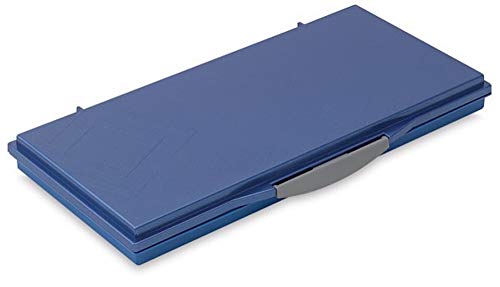
Best Folding Option

- Protective lid helps prevent spills and dust
- Smooth surface for mixing and cleaning
- Supports gouache, acrylic, and watercolor
Best For: Covered, portable mixing in small studios and travel
Best Large Porcelain Mixer – MEEDEN Ceramic Paint Palette
For artists comparing artist palettes for small studios, this 10-by-6.3-inch porcelain tray offers a generous central mixing area plus separate pigment storage. Its white glazed surface suits acrylic, watercolor, gouache, and other water-based media while making color comparison straightforward.
Best For: Small studios that need a durable, spacious palette for mixing several colors at once.
Pros:
- White-glazed porcelain clearly displays mixed colors.
- Large central mixing area and multiple storage sections support larger projects.
- Durable, smooth surface is designed for easy cleanup and repeated use.
Cons:
- At 0.65 kg, it is heavier than a lightweight plastic palette.
- Hand washing is recommended; it should not go in the dishwasher.
This is a strong studio-oriented choice when stability, capacity, and long-term durability matter more than portability.
Best Airtight Storage Palette – Mijello Fusian 24-Well Palette
Martin 92-WP3024B Mijello Airtight Leak Proof Fusian Watercolor 24-Well Palette
Check Price On AmazonAmong artist palettes for small studios, the Mijello Fusian stands out for paint storage as well as mixing. Its 24 slanted wells, two generous mixing areas, and leakproof airtight case help keep colors fresh between sessions.
Best For: Watercolor artists who want organized wells and a palette suitable for studio work, travel, or plein air painting.
Pros:
- Provides 24 ergonomically slanted wells for organized color storage.
- Airtight, leakproof design helps preserve paint for weeks.
- Removable mixing tray simplifies cleaning.
- Colors are designed to appear consistently on the palette and watercolor paper.
Cons:
- Its 14-by-11-inch footprint is relatively large for a compact workspace.
- Hand washing is required, and it is not dishwasher safe.
This palette is particularly practical when paint organization and freshness are higher priorities than having the smallest possible footprint.
Best Glass Mixing Surface – Nuanchu Tempered Glass Palette
For small studios seeking a broad, easy-clean work surface, this tempered-glass palette provides a white background for comparing colors. The oval 10-by-14-inch design includes a thumb hole for easel use and supports oil, acrylic, watercolor, and gouache paints.
Best For: Artists who prefer an open, nonporous mixing surface for studio painting, classes, or tabletop work.
Pros:
- White glass background helps make mixed colors easier to compare.
- Nonporous, smooth surface is reusable and easy to clean.
- Tempered, scratch-resistant glass is designed for repeated use.
- Thumb hole supports one-handed use at an easel.
Cons:
- The broad 14.96-by-10.04-inch size may require substantial workspace.
- Glass handling calls for care, and abrasive tools or harsh chemicals should be avoided.
- It does not provide dedicated paint wells.
This is a flexible choice for painters who want maximum open mixing space rather than built-in compartments.
Best Compact Ceramic Palette – MEEDEN 18-Well Watercolor Palette
This compact MEEDEN tray is a practical option for artist palettes for small studios, combining 18 deep wells with a large central mixing area. Its weighted ceramic construction stays stable on a table or in fieldwork, while the smooth white surface supports watercolor, gouache, acrylic, oil, and tempera.
Best For: Artists who want a stable, moderately sized palette with plenty of separated wells and a dedicated mixing center.
Pros:
- Offers 18 deep wells plus one large mixing area.
- Weighted ceramic body helps prevent shifting or tipping.
- Smooth white surface wipes clean easily and supports clear color mixing.
- Suitable for several paint media, including watercolor, gouache, and acrylic.
Cons:
- At 8 by 5.5 inches, the mixing area is smaller than larger studio trays.
- Its ceramic construction is heavier and less forgiving than plastic.
- It is not dishwasher or oven safe.
Choose this model when organized wells and tabletop stability are more useful than a large uninterrupted mixing field.
Best Clear Palette Set – Tamaki 2-Pack Acrylic Palettes
For small studios seeking artist palettes for small studios, the Tamaki set offers two reusable acrylic surfaces in different shapes. The transparent material, portable size, and smooth finish make this a flexible option for mixing acrylic, gouache, oil, and other pigments.
Best For: Artists who want a two-piece, easy-to-carry palette set for studio work, classes, or outdoor painting.
Pros:
- Includes one rectangular and one oval palette.
- Clear acrylic lets you view colors through the palette.
- Smooth, non-stick surface is reusable and designed for easy cleaning.
- Portable dimensions fit in a backpack, purse, or tote.
Cons:
- Hand-wash care is recommended.
- Protective film must be removed from both sides before use.
- Acrylic may be less substantial than a heavier ceramic palette.
The two shapes add useful flexibility for compact workspaces, while the clear acrylic keeps the set lightweight and portable. It is a practical choice when storage and easy transport matter more than a built-in well system.
Best Ceramic Mixing Tray – MEEDEN 8-Well Watercolor Palette
For small studios comparing artist palettes for small studios, this MEEDEN ceramic tray provides eight dedicated wells in a compact 7-by-7-inch format. Its white polished surface is designed for smooth color mixing and straightforward cleanup with water and tissue.
Best For: Watercolor, gouache, acrylic, oil, or tempera painters who prefer a durable ceramic palette with separated wells.
Pros:
- Eight wells provide separated spaces for colors and mixtures.
- Premium white ceramic offers a durable, polished surface.
- Paint is designed to spread smoothly rather than bead.
- Hand-sized 7-by-7-inch format is compact for a studio or classroom.
Cons:
- At 630 g, it is heavier than plastic or acrylic alternatives.
- The square tray has less portability than a lightweight palette.
- It provides wells rather than a broad uninterrupted mixing surface.
This is a strong fit for painters who value a stable ceramic surface and organized color separation. Its compact footprint works well in a small studio, though the heavier construction may be less convenient for mobile painting.
Best Budget Well Palette – FANDAMEI Oval Paint Trays
For small studios looking for artist palettes for small studios, the FANDAMEI two-pack combines separated wells with a lightweight plastic design. Each 9-by-6.7-inch oval tray includes six holes and four irregular mixing areas, giving artists space to keep colors apart while working.
Best For: Beginners, students, hobbyists, and studios that need affordable palettes for multiple painting or craft projects.
Pros:
- Two palettes provide useful backup or simultaneous workstations.
- Six wells and four irregular areas support color separation and mixing.
- Thumb holes help provide a firm grip.
- Lightweight trays stack for easier storage and transport.
Cons:
- Plastic has a less substantial feel than ceramic.
- Cleaning instructions call for gentle rinsing with a paintbrush.
- Oval trays offer less open mixing space than a flat rectangular palette.
The FANDAMEI set is a practical space-saving choice for shared studios, classes, and casual painting. Its wells also make it useful for holding small craft components, adding versatility beyond paint mixing.
Best Compact Porcelain Set – Etchr Mini 19-Well Palette
For artists seeking artist palettes for small studios, the Etchr Mini combines 19 porcelain wells with a mixing dish in a compact, airtight metal tin. Its small footprint also makes it practical for travel, while supporting watercolor, acrylic, oil, and gouache work.
Best For: Small-studio artists who need a compact, portable palette with multiple wells and a protective tin.
Pros:
- Compact 19-well design fits easily in a small bag or purse.
- Porcelain wells and mixing dish stack inside an airtight metal tin.
- Suitable for watercolor, acrylic, oil, and gouache paint.
- Includes a 2-year warranty and 30-day money-back guarantee.
Cons:
- The compact format offers less mixing space than a full-size studio palette.
- Its listed item volume is only 0.44 fluid ounces.
This is a strong choice when storage and portability matter more than a large working surface. The porcelain wells and tin provide an organized setup for artists with limited studio space.
Best Traditional Work Surface – Tamaki Wooden Paint Palette
For artist palettes for small studios that prioritize a familiar hand-held format, the Tamaki wooden palette offers a traditional shape with a thumb holder. Its 13.7-by-9.3-inch listed size provides a broad surface for acrylic and other painting activities.
Best For: Artists, students, and teachers who prefer a traditional wooden palette for studio work, classes, or portable painting.
Pros:
- Traditional shape is designed for right- or left-hand use.
- Smooth, polished wooden surface and edges are comfortable to hold.
- Reusable and intended to be wiped clean with a dry cloth.
- Suitable for classes, crafts, home projects, and other artistic creations.
Cons:
- The single-palette set does not provide separate wells for colors.
- Wood care instructions call for dry-cloth cleaning rather than washing.
- Its larger traditional shape may be less space-efficient than a folding palette.
The Tamaki is a straightforward option for painters who want ample open mixing space and a thumb-friendly grip. It is less focused on enclosed storage, but its traditional design suits many small-studio routines.
Best Folding Option – HIMI Folding Paint Palette
For artists comparing artist palettes for small studios, the HIMI Folding Paint Palette offers a 200-by-155-millimeter format with a protective lid. Its foldable construction keeps the palette organized between sessions while remaining suitable for studio, travel, outdoor, and classroom use.
Best For: Artists who want a reusable, covered palette for gouache, acrylic, watercolor, and other water-based paints.
Pros:
- Folding design and lid help protect paint from spills, dust, and drying.
- Smooth mixing surface is designed for even color blending and easy cleaning.
- Lightweight construction is easy to carry in a backpack or art bag.
- Sturdy material resists staining and cracking for repeated use.
Cons:
- The 200-by-155-millimeter surface is smaller than many open studio palettes.
- It is made from plastic rather than wood or porcelain.
- Its listed capacity is 14.2 grams.
The HIMI balances workspace, protection, and portability in one compact format. It is especially practical for small studios where a lid can help keep supplies contained and the palette easy to store.
How We Picked the Best Artist Palettes for Small Studios
We focused on palettes that make efficient use of limited workspace without sacrificing practical mixing capacity. The selection includes ceramic trays, tempered glass, plastic and acrylic-friendly palettes, wooden options, folding designs, and airtight watercolor palettes. We considered the number and shape of wells, usable mixing area, ease of cleaning, portability, durability, and how well each design suits watercolor, acrylic, gouache, or oil painting.
Because small studios often serve multiple purposes, we also looked for flexible palettes that can be stored easily between sessions. A compact palette is not automatically useful if its wells are too shallow, its lid leaks, or its surface is difficult to clean.
Quick Comparison
- Best for organized watercolor work: Choose a multiwell ceramic or airtight palette with separate paint wells.
- Best for large color mixtures: Glass and flat ceramic palettes provide broad, nonporous mixing surfaces.
- Best for portability: Folding palettes with lids are easier to carry and protect wet paint.
- Best for beginners or shared studios: Multipacks and simple plastic trays offer low-cost flexibility.
- Best for traditional studio use: Wooden thumb-hole palettes suit painters who prefer a handheld mixing surface.
Key Buying Factors for Artist Palettes for Small Studios
Size and Workspace
Measure the available desk, storage, and sink space before choosing a palette. Larger trays offer more room for mixing but can crowd a compact workstation. Smaller square or oval models are easier to position beside an easel or tablet.
Material and Cleanup
Ceramic and tempered glass are nonporous, durable, and generally easy to wipe clean. Plastic is lightweight and economical, while wood feels comfortable in hand but may require more careful maintenance. For acrylic paint, a smooth surface is especially helpful because dried residue can be difficult to remove.
Wells, Mixing Zones, and Lids
Deep wells help keep colors separated, while broad flat areas are better for gradients and larger mixtures. A lid is valuable for artists who pause between sessions, but check whether it is intended to seal wet paint or simply protect the palette during storage.
Medium Compatibility
Watercolor artists typically benefit from wells and a clean mixing surface. Gouache and acrylic users may prefer a combination of wells and open mixing areas. Oil painters should prioritize a stable, easy-to-clean surface and confirm that the material works with their preferred solvents.
Who Should Buy Which Artist Palettes for Small Studios?
Choose a compact ceramic palette if durability and easy cleaning matter most. Select an airtight 24-well design if you frequently travel with wet watercolor or need many separated colors. A glass palette is a strong choice for broad, precise mixing, while a folding or lidded model is better for portable work and limited storage.
If you are outfitting a shared or budget-conscious studio, a two-pack or simple plastic tray provides useful redundancy. Artists who prefer working with a palette in hand may be happiest with a wooden thumb-hole design. For mixed-media painters, look for a versatile layout with both wells and generous flat mixing areas rather than choosing solely by total well count.