The right SSD enclosure can turn a spare internal drive into fast, portable storage for backups, file transfers, game libraries, or system migration. For Windows users, compatibility depends on more than connector shape: the SSD interface, enclosure controller, USB standard, and thermal design all matter.
We compare 10 popular SSD enclosures for Windows across NVMe and SATA formats, including compact tool-free cases, versatile dual-interface models, and reliable 2.5-inch drive adapters.
Best 10 SSD Enclosures for Windows Picks for 2026
Best Overall NVMe Pick
UGREEN 10Gbps M.2 NVMe Enclosure
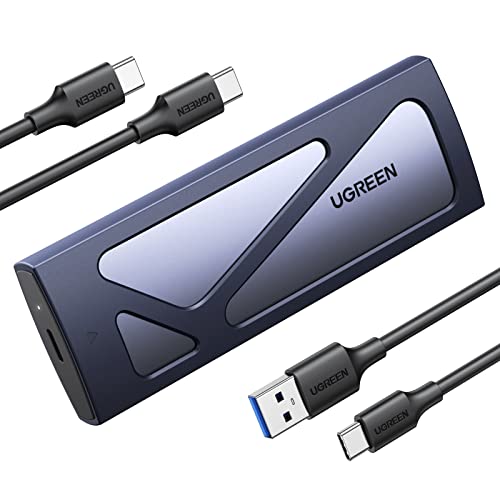
- 10Gbps USB 3.2 Gen 2 performance
- Tool-free support for four M.2 sizes
- Includes USB-C and USB-A cables
Best For: Portable Windows setups using M.2 NVMe SSDs
Best 2.5-Inch SATA Value
BENFEI Tool-Free SATA Enclosure

- Fits 2.5-inch SATA SSDs up to 6TB
- USB Type-C and Type-A connectivity
- Tool-free installation with UASP support
Best For: Reusing 2.5-inch SATA SSDs with Windows PCs
Best Compact NVMe Option

- 10Gbps USB 3.1 Gen 2 interface
- Supports four M.2 NVMe lengths
- Compact design with thermal pad
Best For: M-key PCIe NVMe drives used with Windows
Best Dual-Protocol Choice
SABRENT Tool-Free M.2 Enclosure
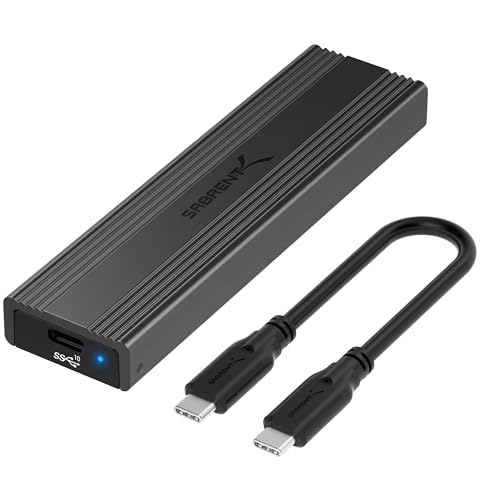
- Supports M.2 NVMe and M.2 SATA drives
- Tool-free installation
- 10Gbps USB 3.2 Type-C connection
Best For: Windows users with mixed M.2 drive types
Versatile NVMe/SATA Pick

- Supports M.2 NVMe and SATA drives
- USB 3.2 Gen 2 up to 10Gbps
- Includes USB-C and USB-A cables
Best For: Windows users with compatible 2242, 2260, or 2280 M.2 SSDs
Simple 2.5-Inch Value Pick
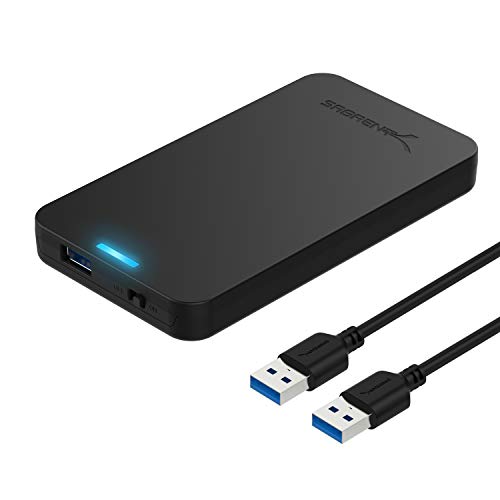
- Tool-free 2.5-inch drive installation
- USB 3.0 up to 5Gbps
- Plug-and-play Windows support
Best For: Repurposing standard 2.5-inch SATA SSDs or notebook drives
Feature-Rich Portable Pick

- Supports NVMe and SATA M.2 SSDs
- USB 3.2 Gen 2 up to 10Gbps
- Smart display and thermal silicone pad
Best For: Portable M.2 storage across Windows PCs and compatible devices
Best Transparent SATA Pick
ORICO 2.5-inch USB-C Enclosure

- USB 3.1 Gen 2 with UASP and up to 10Gbps support
- Tool-free 2.5-inch SATA drive installation
- Includes USB-C-to-C and USB-A-to-C cables
Best For: Windows users with 2.5-inch SATA SSDs or HDDs
Best Dual-Protocol Premium Pick

- Supports M.2 NVMe and SATA SSDs
- USB-C 3.2 Gen 2 with up to 10Gbps bandwidth
- Tool-free Q-Latch design and IP55 protection
Best For: Windows users needing one enclosure for NVMe and SATA M.2 drives
Best Overall NVMe Pick – UGREEN 10Gbps M.2 NVMe Enclosure
If you need an SSD enclosure for Windows and have an M.2 NVMe drive, the UGREEN enclosure combines 10Gbps USB 3.2 Gen 2 performance with a tool-free design. It supports common M.2 lengths, includes both USB-C and USB-A cables, and works without additional drivers.
Best For: Windows users who want a portable, tool-free enclosure for an M.2 NVMe SSD.
Pros:
- Supports USB 3.2 Gen 2 speeds up to 10Gbps with a compatible cable.
- Tool-free installation supports 2230, 2242, 2260, and 2280 NVMe drives.
- Includes USB-C-to-C and USB-C-to-A cables, plus a silicone case and thermal pad.
- RTL9210 controller provides UASP, TRIM, and multiple protection features.
Cons:
- Does not support SATA NGFF or mSATA SSDs.
- Full 10Gbps performance requires a USB-C 3.2 Gen 2 data connection.
With broad NVMe size support, simple installation, and useful included accessories, this is a flexible choice for moving or reusing an M.2 drive with a Windows computer.
Best 2.5-Inch SATA Value – BENFEI Tool-Free SATA Enclosure
For a 2.5-inch SATA SSD, this BENFEI enclosure offers a straightforward way to create external storage for Windows. Its USB Type-C and Type-A connectivity, tool-free installation, and UASP support make it practical for file transfers and drive reuse.
Best For: Windows users converting a 2.5-inch SATA SSD into a portable external drive.
Pros:
- Supports 2.5-inch, 7mm or 9.5mm SATA I/II/III drives up to 6TB.
- Tool-free, plug-and-play installation requires no driver.
- USB Type-C and Type-A connection options improve host compatibility.
- Supports UASP and transfer rates up to 5Gbps.
Cons:
- Designed for 2.5-inch SATA drives, not M.2 SSDs.
- Its 5Gbps USB interface is slower than 10Gbps enclosures.
This is a sensible choice when your spare drive is a standard 2.5-inch SATA SSD rather than an M.2 model. The integrated cable design and simple installation keep setup uncomplicated.
Best Compact NVMe Option – ORICO 10Gbps M.2 NVMe Case
The ORICO M.2 NVMe case is a compact SSD enclosure for Windows built around a USB 3.1 Gen 2 interface. It supports common NVMe drive lengths, includes connections for USB-C and USB-A hosts, and uses a thermal pad to help with heat dissipation.
Best For: Users who want a small 10Gbps enclosure for an M-key PCIe NVMe SSD.
Pros:
- Offers theoretical USB 3.1 Gen 2 speeds up to 10Gbps.
- Supports 2230, 2242, 2260, and 2280 M-key NVMe SSDs up to 8TB.
- Includes USB-C-to-C and USB-C-to-A connection options.
- Compact aluminum-and-plastic design includes a thermal pad.
Cons:
- Does not support M.2 SATA, PCIe AHCI, or Mac SSDs.
- Installation uses a screw and requires the included screwdriver.
- New SSDs must be formatted before use.
Choose this model when you specifically have an M-key PCIe NVMe drive and value a compact enclosure. Confirm the SSD type before buying, since SATA-based M.2 drives are not supported.
Best Dual-Protocol Choice – SABRENT Tool-Free M.2 Enclosure
The SABRENT EC-SNVE stands out among SSD enclosures for Windows because it accepts both M.2 NVMe and M.2 SATA drives. Its tool-free design, 10Gbps USB 3.2 Type-C interface, and slim aluminum construction make it useful for swapping compatible bare drives.
Best For: Users who need one enclosure for both M.2 NVMe and M.2 SATA SSDs.
Pros:
- Supports both M.2 PCIe NVMe and M.2 SATA SSDs.
- Tool-free installation takes seconds and needs no screwdriver.
- USB 3.2 Type-C supports up to 10Gbps and is backward compatible.
- Includes a thermal pad and slim aluminum enclosure.
Cons:
- Does not support 2.5-inch SATA or mSATA drives.
- Cannot accommodate SSDs with pre-installed heatsinks.
- Only a USB-C-to-C cable is listed in the box contents.
If your drive collection includes both M.2 SATA and NVMe models, the SABRENT offers useful flexibility without tools or external power. Check drive dimensions and remove any heatsink before installation.
Versatile NVMe/SATA Pick – SSK M.2 SSD Enclosure
If you need one of the more flexible ssd enclosures for windows, the SSK SHE-C325 PRO supports both NVMe PCIe and SATA M.2 drives. Its USB 3.2 Gen 2 connection can deliver up to 10Gbps with a compatible host, while the included USB-C and USB-A cables make it practical for newer and older Windows computers.
Best For: Windows users with compatible 2242, 2260, or 2280 M.2 NVMe or SATA SSDs who want a portable enclosure with both cable options.
Pros:
- Supports M-Key and B+M Key M.2 NVMe and SATA SSDs.
- USB 3.2 Gen 2 supports up to 10Gbps and is backward compatible with USB 3.0 and USB 3.1 Gen 1.
- Includes thermal pads, a screwdriver, and both USB-C and USB-A cables.
- Aluminum shell, UASP, TRIM, plug-and-play operation, and no external power supply required.
Cons:
- Does not support M.2 PCIe AHCI drives, mSATA drives, Wi-Fi or capture cards, or non-M.2 SSDs.
- The SSD is not included and may need formatting before use.
This is a strong all-around option when drive-protocol compatibility and included accessories matter. Confirm that your SSD is a supported NVMe or SATA M.2 model before ordering, and use a USB-C Gen 2 or Thunderbolt 3 port to pursue its highest stated speeds.
Simple 2.5-Inch Value Pick – SABRENT SATA Enclosure
For a standard 2.5-inch SATA drive, the SABRENT EC-UASP is a straightforward choice among ssd enclosures for windows. Its tool-free design makes installation easy, and USB 3.0 connectivity supports transfers up to 5Gbps when paired with a compatible port.
Best For: Windows users repurposing a standard 2.5-inch SATA SSD or notebook hard drive without tools or extra drivers.
Pros:
- Tool-free installation makes drive setup quick and simple.
- Supports standard 2.5-inch SATA and SATA II drives.
- USB 3.0 supports up to 5Gbps and remains compatible with USB 2.0 and USB 1.1.
- Plug-and-play, hot-swappable operation with UASP SATA III support.
Cons:
- Designed for 2.5-inch SATA drives, not M.2 SSDs.
- Uses a plastic enclosure rather than aluminum.
- Its maximum stated speed is lower than the 10Gbps USB 3.2 Gen 2 models in this roundup.
The EC-UASP keeps things uncomplicated for older or commonly available 2.5-inch drives. It is best suited to basic external storage, drive reuse, or transfers where tool-free setup matters more than the fastest available interface.
Feature-Rich Portable Pick – fanxiang MD86 M.2 Enclosure
The fanxiang MD86 combines broad M.2 compatibility with a 10Gbps USB 3.2 Gen 2 interface, making it a feature-rich option for Windows users. It supports NVMe and SATA drives in several sizes and includes both USB-C and USB-A connection options for use across laptops, desktops, and other compatible devices.
Best For: Windows users who want a portable aluminum enclosure for M.2 NVMe or SATA drives, plus compatibility with consoles and select OTG-capable devices.
Pros:
- Supports NVMe and SATA protocols, M and B+M keys, and 2230, 2242, and 2280 SSD sizes.
- USB 3.2 Gen 2 and UASP provide a stated theoretical speed of up to 10Gbps.
- Includes a thermal silicone pad and USB-C/USB-A connection options.
- Plug-and-play design works with Windows 7 and above and several other device types.
Cons:
- The SSD is not included.
- Actual speeds depend on the host port, drive, and system.
- The smart-display interface may require a short press of “3” to switch between Chinese and English.
The MD86 stands out when you want more than a basic drive shell, particularly its smart display and wide device compatibility. Check your SSD’s key, protocol, size, and capacity—support is listed up to 4TB—before installation.
Best Transparent SATA Pick – ORICO 2.5-inch USB-C Enclosure
If you need one of the more flexible ssd enclosures for windows, the ORICO 2139C3-G2 supports 2.5-inch SATA SSDs and HDDs while offering USB-C connectivity. Its tool-free design, included cables, and transparent shell make it convenient for upgrades, file transfers, and drive monitoring.
Best For: Windows users with 2.5-inch SATA SSDs or HDDs who want a straightforward, portable enclosure.
Pros:
- USB 3.1 Gen 2 interface with UASP and up to 10Gbps data-transfer support.
- Supports Windows 10/8.1/7, Linux, and macOS.
- Tool-free installation with both USB-C-to-C and USB-A-to-C cables included.
- Transparent housing and a 10-minute auto-sleep function.
Cons:
- Limited to 2.5-inch SATA drives rather than M.2 SSDs.
- Supports one drive at a time.
The ORICO is a practical choice when your Windows drive uses the familiar 2.5-inch SATA format. It is less suitable for NVMe upgrades, but its broad system support and adaptable cabling make it easy to use with existing hardware.
Best Dual-Protocol Premium Pick – ASUS Cobble M.2 SSD Enclosure
The ASUS Cobble is a versatile option among ssd enclosures for windows, supporting both M.2 PCIe NVMe and SATA SSDs. Its USB-C 3.2 Gen 2 interface, tool-free Q-Latch design, and IP55-rated protection suit users who move drives and data between Windows computers and other devices.
Best For: Windows users who need one enclosure for both NVMe and SATA M.2 drives.
Pros:
- Supports M.2 2242, 2260, and 2280 SSDs using NVMe or SATA protocols.
- USB-C 3.2 Gen 2 provides up to 10Gbps bandwidth.
- Tool-free ASUS Q-Latch design enables quick SSD swaps.
- IP55 water and dust resistance plus support for Windows 10/11, macOS, phones, and consoles.
Cons:
- Its 10Gbps interface may not match the full potential of faster internal SSD connections.
- The supplied cable is USB-C to USB-C, which may require an adapter for some computers.
The Cobble stands out for compatibility: it can accommodate both major M.2 protocols and several common drive lengths. Choose it if you value quick swapping and added environmental protection more than the smallest possible enclosure.
Best High-Capacity NVMe Value – MAIWO M.2 USB-C Enclosure
The MAIWO M.2 enclosure is a focused choice for ssd enclosures for windows when your drive is an M-Key NVMe model. It combines USB 3.1 Gen 2, UASP and TRIM support with a compact aluminum body, while its tool-free design simplifies installing compatible SSDs.
Best For: Windows users with 2230, 2242, 2260, or 2280 M-Key NVMe SSDs who want an affordable portable reader.
Pros:
- USB 3.1 Gen 2 supports theoretical speeds up to 10Gbps, with UASP and TRIM.
- Supports NVMe M-Key SSDs in four common lengths and capacities up to 8TB.
- Tool-free installation and included USB-C-to-C plus USB-A cable.
- Aluminum alloy shell helps with durability and heat dissipation.
Cons:
- Does not support M.2 SATA drives or SSDs with heatsinks.
- A new drive must be initialized, partitioned, and formatted before use.
- Only one SSD is supported at a time.
The MAIWO is a sensible match for a clearly identified NVMe drive and offers useful Windows compatibility without unnecessary complexity. Verify that your SSD is M-Key NVMe and heatsink-free before buying.
How We Picked These SSD Enclosures for Windows
We focused on enclosures that match common Windows storage needs and clearly identify their supported drive type, physical size, interface, and connection standard. The lineup includes M.2 NVMe models, M.2 SATA-compatible options, and 2.5-inch SATA enclosures so you can choose around the drive you already own.
We also considered advertised transfer speeds, USB-C and USB-A connectivity, UASP support, tool-free installation, capacity ratings, heat management, and controller compatibility. Stated speeds are theoretical maximums; actual performance depends on the SSD, host computer, cable, file sizes, and USB port.
Quick Comparison
| Best For | Drive Type | Typical Speed Class | Useful Feature |
|---|---|---|---|
| Fast everyday transfers | M.2 NVMe | 10Gbps USB | USB-C connectivity |
| Older 2.5-inch SSDs | 2.5-inch SATA | 5Gbps USB | Broad Windows compatibility |
| Flexible drive reuse | M.2 NVMe/SATA | Up to 10Gbps USB | Dual-protocol support |
| Simple installation | NVMe or SATA, depending on model | 5Gbps–10Gbps USB | Tool-free access |
Key Buying Factors for SSD Enclosures for Windows
Match the SSD Interface
NVMe and SATA M.2 drives may look similar but use different protocols. An NVMe-only enclosure will not operate a SATA M.2 SSD, while a dual-protocol enclosure is more versatile. A 2.5-inch SATA drive requires a separate 2.5-inch SATA enclosure rather than an M.2 case.
Check USB Speed and Connectors
A 10Gbps USB 3.2 Gen 2 enclosure can be a strong choice for modern Windows PCs, but it will run more slowly when connected to a 5Gbps port. Confirm whether the case includes USB-C, USB-A, or both, and check the cable length and connector types.
Consider Heat and Sustained Workloads
NVMe SSDs can generate substantial heat during large transfers. Look for an aluminum shell, thermal pad, ventilation, or another method of heat dissipation if you regularly move large video files, install games, or clone drives. Thermal throttling can reduce sustained speeds.
Look for Practical Installation Features
Tool-free covers and captive screws make frequent drive swaps easier. UASP support can improve performance and reduce overhead on compatible Windows systems. Also verify the supported M.2 lengths—2230, 2242, 2260, and 2280—before ordering.
Who Should Buy Which SSD Enclosures for Windows?
Choose an NVMe enclosure if you have a PCIe M.2 SSD and want the fastest portable storage available from this group. A 10Gbps USB model is a sensible balance for most Windows laptops and desktops.
Choose a SATA M.2 or dual-protocol enclosure if you are unsure which M.2 drive you own or want to reuse multiple drives. Confirm the product explicitly supports both NVMe and SATA rather than assuming all M.2 cases do.
Choose a 2.5-inch SATA enclosure for a conventional 2.5-inch SSD or hard drive removed from an older laptop. These models are usually straightforward, affordable, and widely compatible, though their SATA interface limits maximum transfer speeds.
Choose a tool-free model if convenience matters most, while power users should prioritize cooling and reliable 10Gbps connectivity. Before buying, confirm your SSD format, Windows computer ports, desired cable type, and whether the enclosure’s capacity and protocol specifications fit your drive.